/Insights/Compliance

SOX Compliance Made Easy: Understanding Section 404 and How AI Helps

8 min read

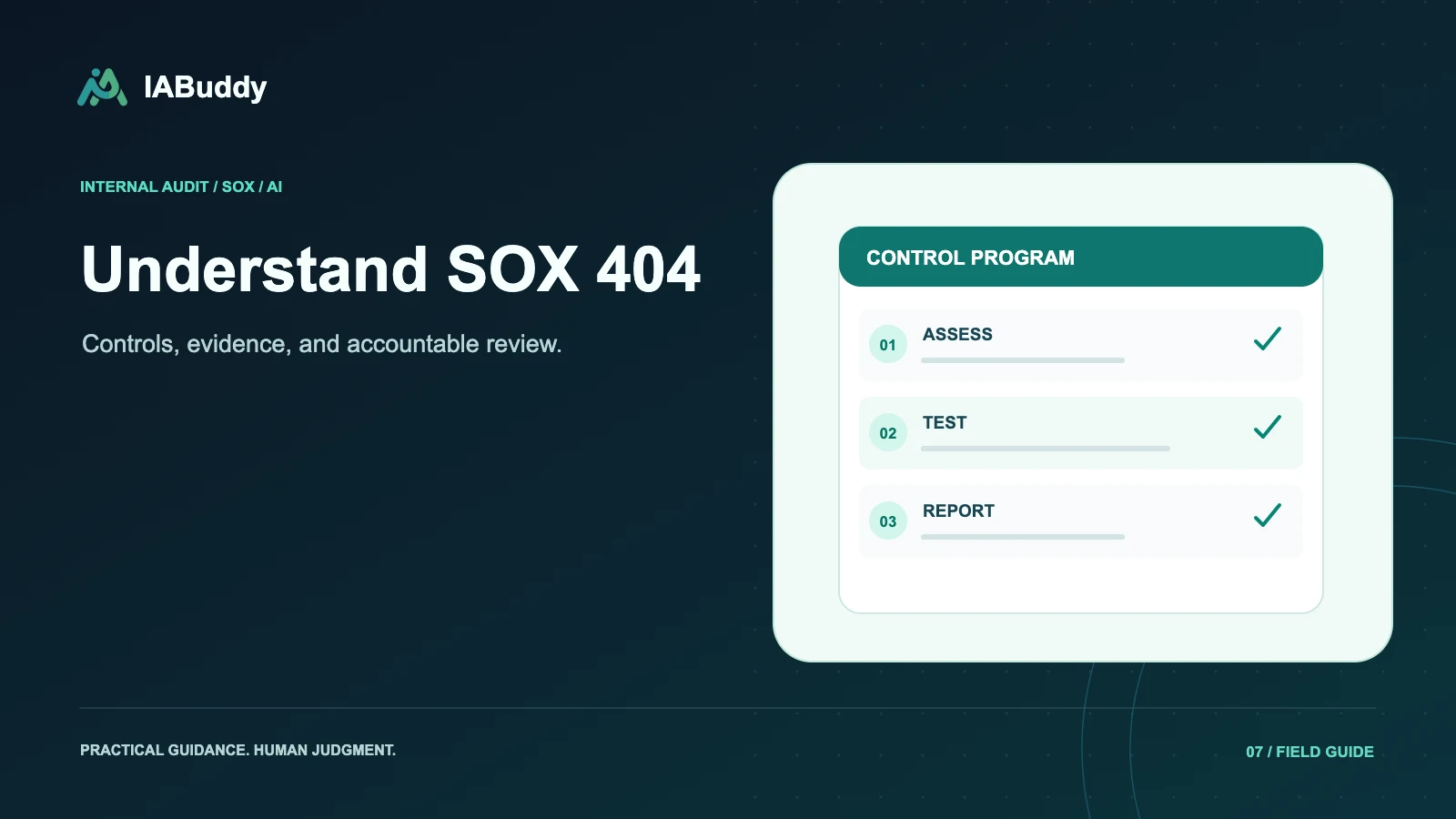
Section 404 of the Sarbanes-Oxley Act (SOX) is often cited as one of the most challenging compliance requirements for public companies. It mandates that management annually assess and report on the effectiveness of internal controls over financial reporting (ICFR), and for many companies, external auditors must attest to this assessment. Ensuring SOX compliance under Section 404 means meticulously documenting processes, testing key controls, and remediating any deficiencies – all of which can be time-consuming and resource-intensive.

The good news? Advances in technology, particularly AI-powered audit tools, are making Section 404 compliance easier to manage. In this post, we’ll break down what Section 404 entails, the common challenges companies face, and how artificial intelligence can help streamline and strengthen your SOX compliance efforts.

What is SOX Section 404?

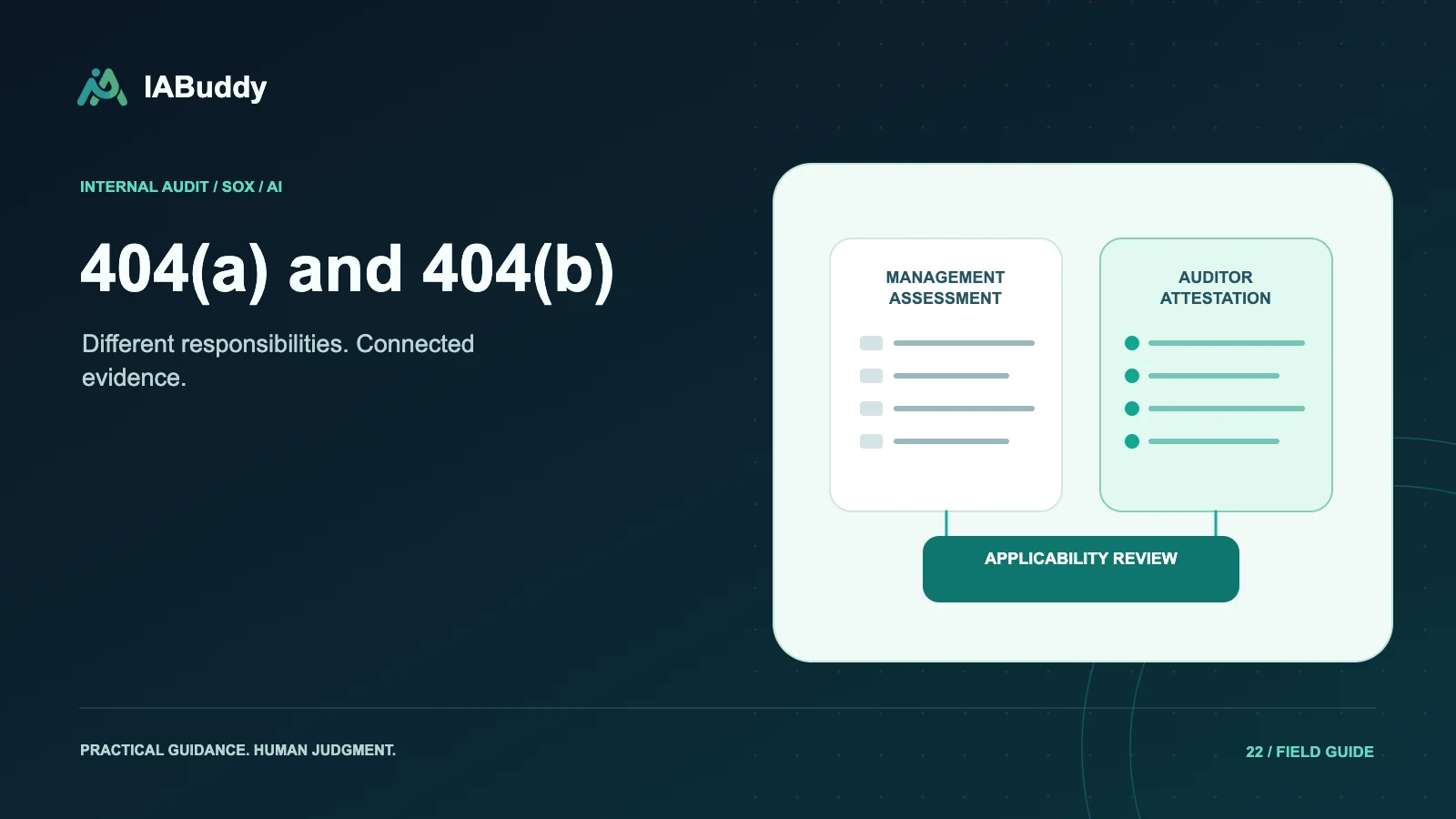
Section 404 is a provision of the Sarbanes-Oxley Act of 2002 that focuses on internal controls. It requires two main things each fiscal year:

  • Management’s Assessment: Company management must evaluate and report on the effectiveness of the company’s internal controls over financial reporting.
  • Independent Attestation: In many cases (especially for larger public companies), an external audit firm must audit and attest to management’s assessment of those internal controls.

In practice, complying with Section 404 means that organizations need to:

  • Document their internal control structures (often in the form of narratives, flowcharts, or risk-control matrices mapping out processes and controls).
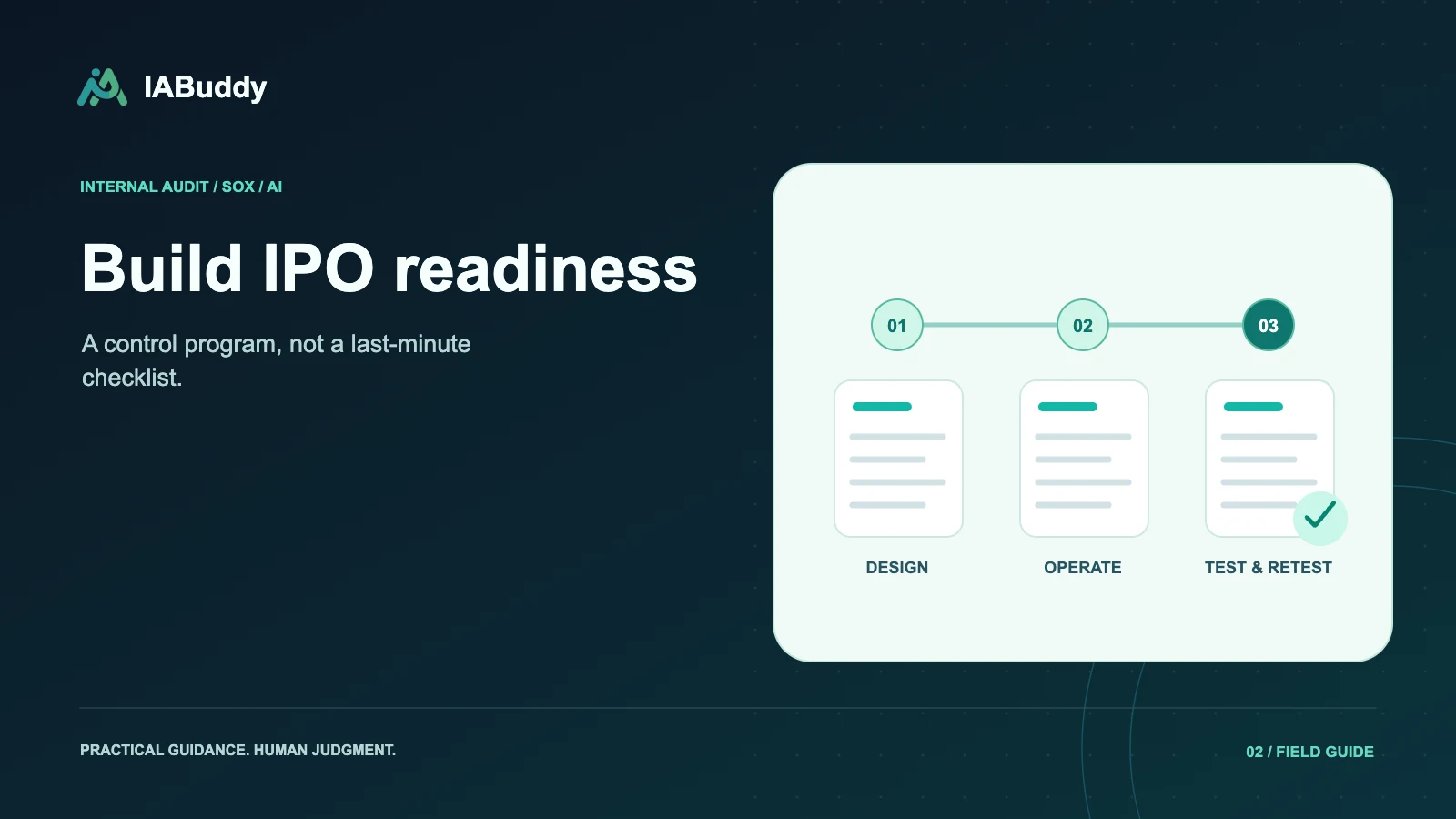
  • Test the controls for both design and operating effectiveness. This involves checking that controls are well-designed to address relevant risks and verifying they are operating as intended throughout the year.
  • Identify and Remediate Deficiencies: If any control gaps or weaknesses (deficiencies) are found, they must be corrected and reported appropriately. Significant deficiencies or material weaknesses are of particular concern and must be reported to regulators and investors.

Challenges in SOX 404 Compliance

For internal auditors, compliance managers, and finance teams, Section 404 can be challenging for several reasons:

  • Extensive Documentation Workload: Keeping comprehensive documentation of all key controls, processes, and test results is a massive undertaking. Controls may span IT systems, financial processes, and operational workflows. Maintaining this documentation up-to-date (and audit-ready) is laborious.
  • Resource and Time Intensive Testing: Testing internal controls often requires sampling transactions, reviewing evidence, and interviewing control owners. With potentially hundreds of controls to test, teams often struggle to cover everything thoroughly without working overtime.
  • Evolving Risks and Controls: The business environment isn’t static. As companies introduce new systems or processes, the internal control environment changes. Ensuring your SOX control framework stays updated – and that new risks (like cybersecurity threats or new accounting standards) are covered – is a moving target.
  • Human Error and Inconsistencies: Manual processes dominate many compliance programs. Different team members might document and test controls in slightly different ways, leading to inconsistencies. Important steps might be overlooked, especially when rushing to meet annual reporting deadlines.
  • High Stakes: The stakes for getting Section 404 wrong are high. A material weakness in internal controls can lead to financial misstatements, which in turn can damage a company’s stock price and reputation. Management and auditors feel pressure to ensure there are no surprises when the annual internal control audit comes around.

How AI Can Simplify Section 404 Compliance

Emerging AI audit tools and compliance software are transforming how organizations approach SOX 404 requirements. Here are several ways that AI can make Section 404 compliance easier and more effective:

Continuous Control Monitoring

One of the limitations of traditional SOX testing is reliance on periodic or sample-based testing. AI changes the game by enabling continuous monitoring of controls. For example, instead of an auditor testing 30 sample transactions for a control, an AI system can monitor all transactions year-round and flag anomalies in real time. If an unusual transaction slips through a control (say, an approval that was bypassed or an entry that doesn’t meet policy), the AI can alert the team immediately. This proactive approach means issues are caught and addressed faster, improving the overall reliability of your ICFR.

Automated Data Analysis

AI, powered by machine learning, excels at sifting through large datasets quickly. For SOX compliance, this means AI tools can automatically analyze financial data and user activity logs to identify irregularities or red flags that might indicate a control failure. For instance, AI can detect if there were any unauthorized manual journal entries or if certain users have unusual access privileges in financial systems. By automating data analysis, companies reduce the chances of overlooking hidden issues that a manual review might miss.

Streamlined Testing and Documentation

Preparing for Section 404 audits usually involves mountains of paperwork – control matrices, test plans, evidence attachments, and reports. AI-powered compliance software can automate much of this work:

  • It can generate standardized testing templates for each control, ensuring consistency.
  • When testers execute a control test, the AI can automatically record the results, attach relevant evidence (like screenshots or reports), and even draft initial conclusions for review.
  • If a control operates daily or continuously (like an automated system control), AI can document evidence of its operation throughout the year, not just at a single point in time.

This level of automation not only saves time but also creates a thorough audit trail. Every step is logged, and all supporting documentation is neatly organized, which is a lifesaver when auditors come knocking.

Enhanced Risk Assessment

AI can assist in the upfront risk assessment process that determines which controls are key (and thus in scope for SOX testing). By analyzing historical data and industry trends, AI tools can help identify areas with higher likelihood of misstatements or control failures. For example, if the company has a history of issues in revenue recognition, the AI might flag related controls as higher risk this year. This ensures you allocate testing effort where it’s needed most. Moreover, AI can simulate “what-if” scenarios – e.g., how would changes in a process potentially introduce new control risks? – helping compliance teams stay ahead of emerging risks.

Issue Detection and Remediation Support

When control issues are found, AI can categorize and prioritize them for you. Suppose multiple deficiencies are identified; an AI system could analyze which ones might constitute a larger problem (possibly aggregating into a material weakness) based on impact and frequency. Additionally, AI tools can suggest remediation steps by cross-referencing the nature of the deficiency with a knowledge base of best practices. For instance, if you have a segregation of duties issue, the software might recommend specific access controls or process changes to implement. This guidance can accelerate the remediation process.

Improved Internal Controls Culture

By incorporating AI into everyday compliance activities, organizations often find that control awareness improves across the company. For example, some AI compliance platforms can send automated reminders to control owners to perform their tasks (like monthly reconciliations or reviews) and even monitor completion. This not only helps ensure controls are operating effectively, but it also instills a more disciplined, proactive compliance culture. People know that the controls are being continuously watched and supported by intelligent systems, which encourages diligence.

The Human Element and Oversight

Even with AI in the mix, human expertise remains vital. AI can greatly reduce the manual workload and help spot issues, but professional judgment is needed to make final evaluations:

  • When an AI tool flags a potential control exception, an internal auditor or compliance manager should review the context and determine if it’s truly a problem or a false alarm.
  • Management still needs to assess the severity of any control deficiencies and decide on disclosure obligations. AI provides data, but leadership provides judgment.
  • Auditors (internal or external) will want to understand how the AI system works. Be prepared to explain your AI’s role in compliance, including how it was configured and how reliable its data is. Transparency is key to maintaining trust in the AI-assisted compliance process.

Think of AI as your compliance copilot. It handles a lot of the heavy lifting and analysis, but you’re still in the captain’s seat steering the overall direction.

Embracing AI for Easier SOX Compliance

For internal audit and compliance teams tasked with SOX 404, AI technology is a welcome development. It offers the possibility of doing more testing with greater precision, all in less time. By leveraging AI:

  • You can shift from a reactive, annual compliance project to a proactive, ongoing assurance process.
  • Instead of viewing SOX compliance as a headache, you can gain real value – the AI insights might uncover inefficiencies or errors in processes that, once fixed, actually improve your business operations (beyond just passing an audit).
  • Your team can focus on high-level analysis and advisory work, rather than ticking boxes in spreadsheets all day.

Many organizations are starting small – perhaps implementing an AI audit tool on just a few processes or controls as a pilot – and then expanding once they see the benefits. Key is to choose the right platform that fits your needs and ensures security (since control and financial data is sensitive).

SOXComplianceSection 404

Ready to automate your audit?

Join forward-thinking internal audit teams who are scaling compliance without scaling headcount.

iabuddy.ai

Reporting Dashboard

View and analyze control testing performance and outcomes.

Testing Status

37total
Ready for Review26
Review in Progress8
Complete3

Testing by Phase

37total
Walkthrough22
Interim14
Remediation1

Testing Conclusion

37total
Effective31
Ineffective6

Control Attestation Status

570total
Not Attested570

Controls by significance

570total
Key375
Non-Key195

Controls mapped to risk

570total
Mapped525
Unmapped45

37

AI TESTING COMPLETED

26

CONTROLS READY FOR REVIEW

8

REVIEW IN PROGRESS

3

CONTROLS REVIEWED

6

OPEN ISSUES