Key Takeaways
- An audit tickmark is a symbol whose meaning is defined in the workpaper, usually indicating a procedure performed or a result documented.
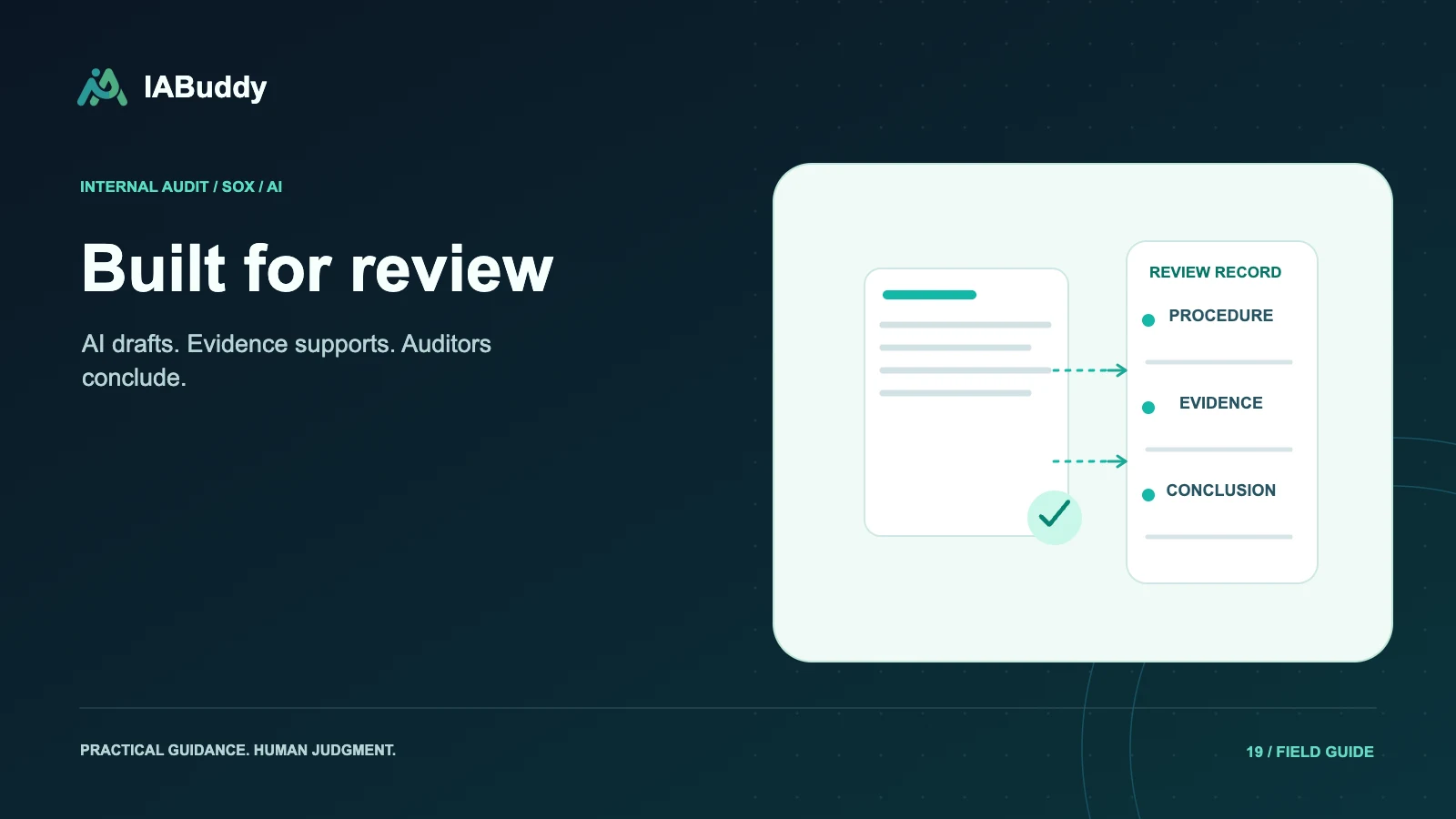
- AI evidence annotation can help locate and mark supporting details, but the mark itself is not proof.
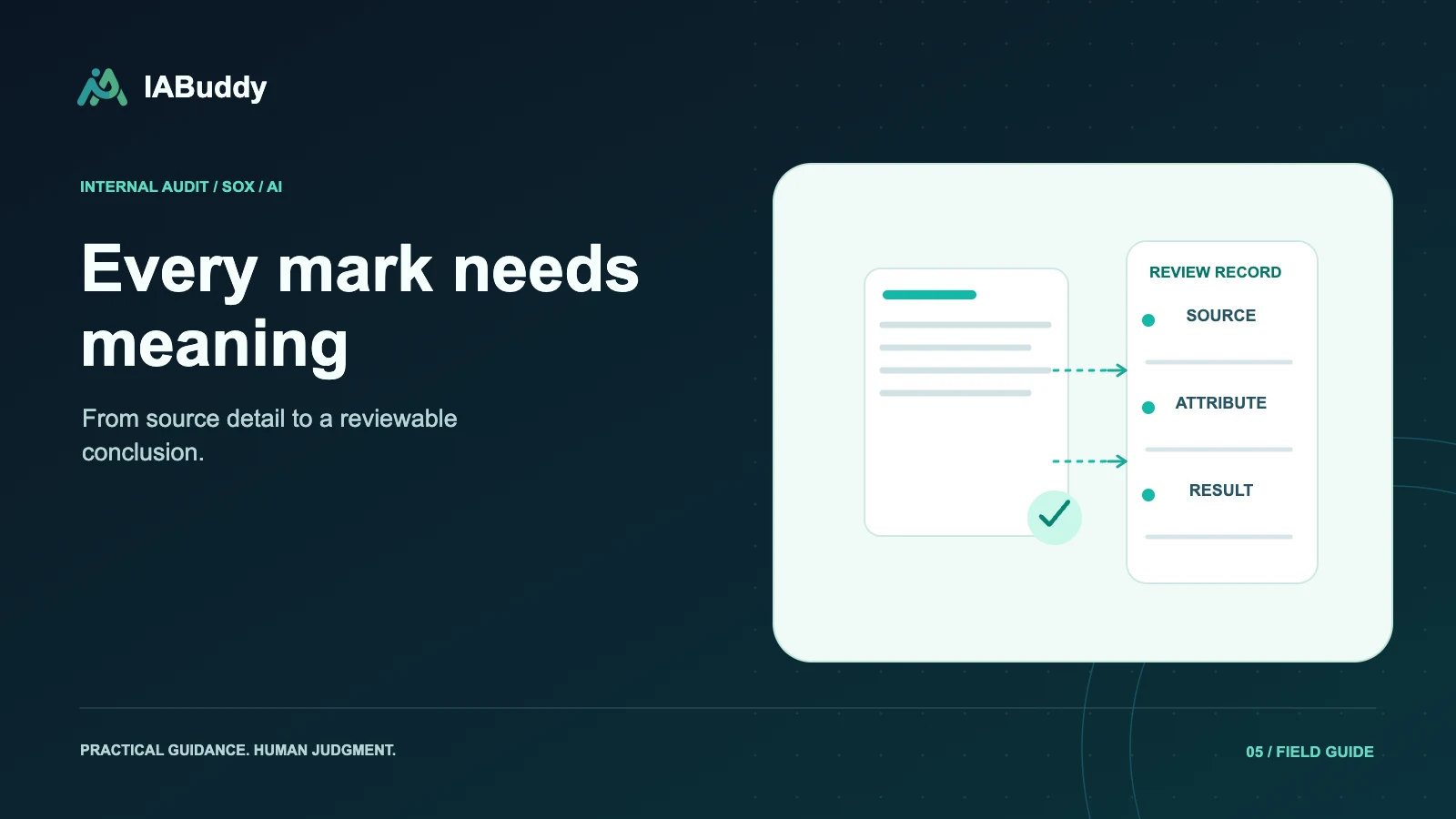
- A useful annotation connects the source, testing attribute, procedure, result, and reviewer.
What makes a tickmark useful to a reviewer?
A checkmark next to an amount is ambiguous unless the reviewer knows what it means. Was the number agreed to an invoice, recalculated, compared with an approval threshold, or simply read? Define the symbol and document the relevant procedure. Use different outcomes for a completed test, an exception, and work that still needs evidence.
Prefer a small, consistent legend over dozens of decorative symbols. Keep the legend close to the testing record and make the underlying source location accessible. The goal is to communicate work performed, not to make every page look reviewed.
An annotation record you can reuse
| Component | Illustrative entry |
|---|---|
| Control and sample | AP-04, sample S-008 |
| Attribute | Approval occurred before release |
| Source | Invoice approval log, page 2, row 8 |
| Procedure | Compare approval and release timestamps |
| Result | Approval precedes release under the stated time convention |
| Review | Reviewer checks identity, dates, and policy applicability |
This is a documentation example, not a completed test. A real workpaper also needs the applicable period, policy version, population context, and actual supporting records.
What can AI annotation help with?
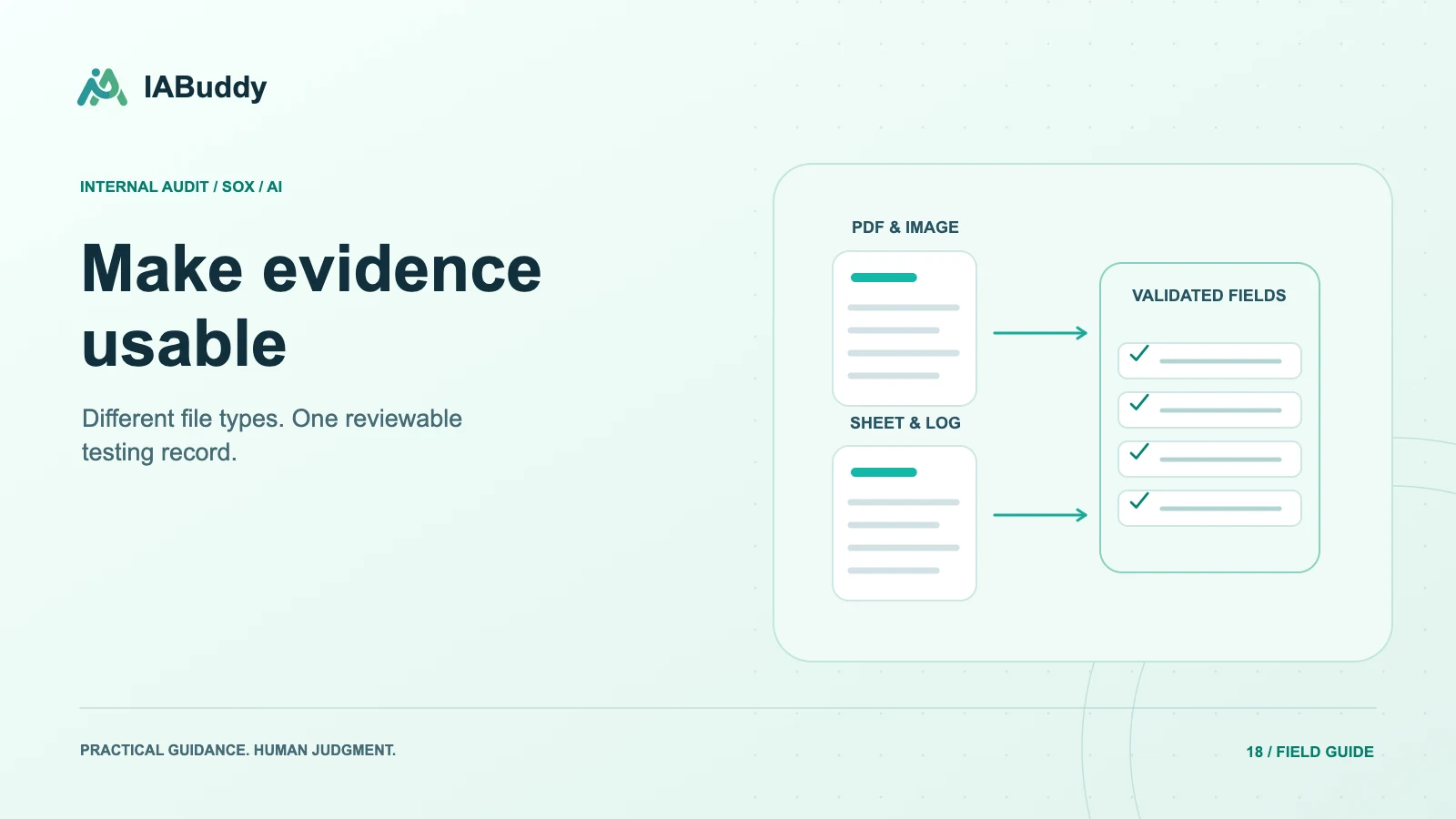
AI can propose which passage, cell, page, or file contains a relevant detail and draft an explanation of its relationship to a testing attribute. This can reduce repeated searching and copying when the evidence is usable. It is especially useful when the same sample has support across several files.
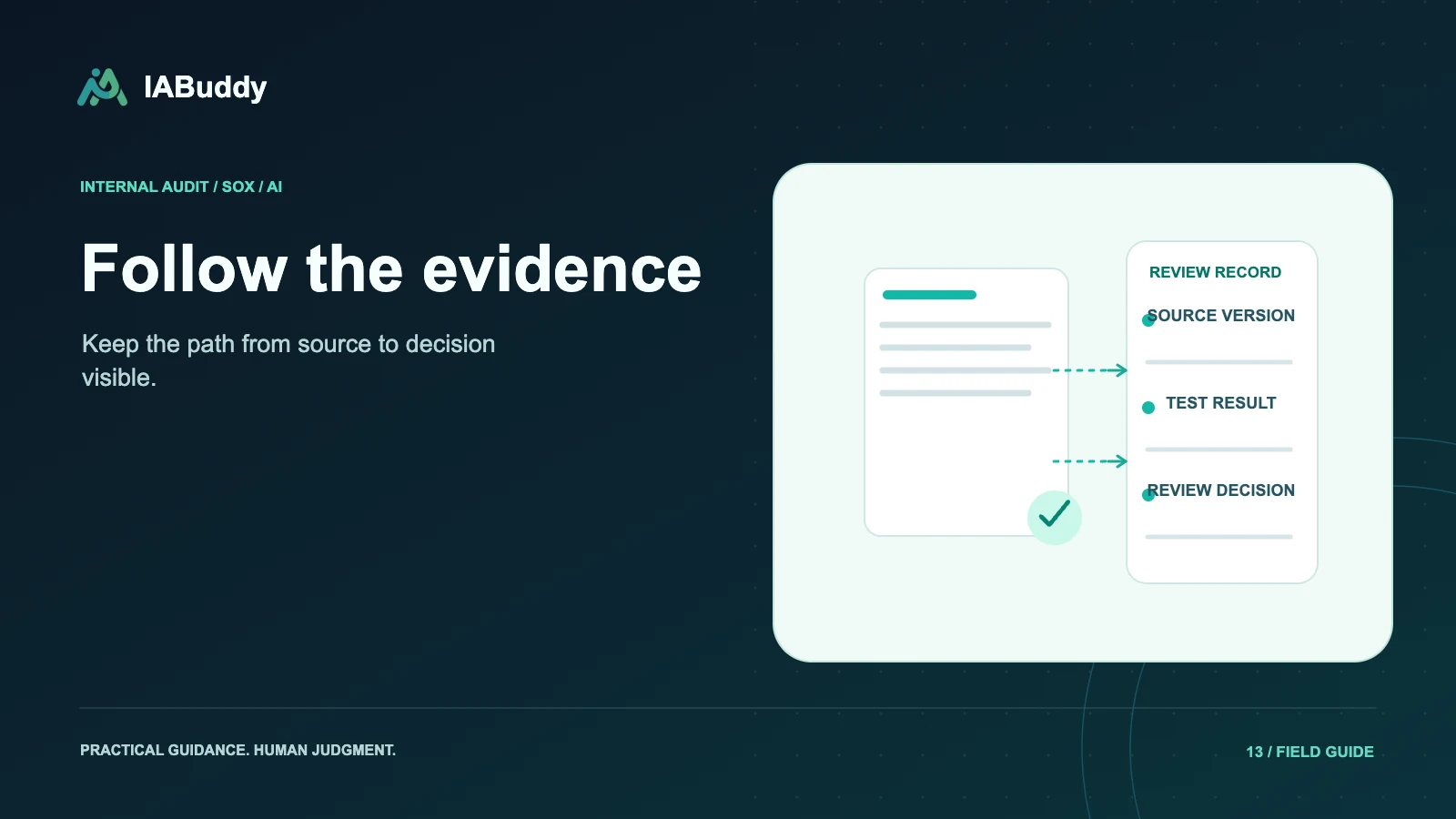
Keep the original artifact separate from derived annotations. Record which version was tested and preserve superseded evidence when required by policy. An annotation added to a replacement file must not silently change the basis of an earlier conclusion.
What must the auditor still check?
Check whether the reference points to the correct sample, entity, and period. Compare extracted amounts and dates against the source. Confirm that an approval identity is authorized under the relevant policy and that the timestamp represents the event being tested. A document creation date is not automatically an approval date.
Be cautious with unclear scans, handwritten marks, hidden spreadsheet columns, merged cells, and inconsistent time zones. When support is ambiguous, document the limitation and request clarification. Do not allow the tool to convert an unreadable signature into a positive result.
How should exceptions appear?
Keep the original expected criterion and the observed evidence visible. Explain the deviation without prematurely deciding its severity. For missing support, identify the exact gap and any alternative procedures considered; absence of evidence should not be disguised as a successful test.
A useful follow-up request asks for a specific missing item: for example, the approval record applicable to sample S-008, not simply 'more evidence.' Retain the response and any retest alongside the original result.
A quality check before workpaper review
Ask another auditor to follow three annotations from the summary back to their sources. Can they understand the procedure without asking the preparer to explain it verbally? Can they distinguish the AI's proposed interpretation from the reviewed conclusion? Can they identify contradictory support?
PCAOB AS 1215 provides the relevant external-audit documentation context; it does not prescribe a universal AI tickmark legend. Follow the engagement's methodology and documentation requirements.
In IABuddy, testing results, evidence references, annotations, and the testing memo stay connected for review. See the audit workpaper workflow with a sample that includes both supporting and contradictory evidence, not only a clean demonstration file.
Frequently asked questions
Are tickmarks required to use a particular set of symbols?
There is no universal symbol set in this guide. Use the engagement's approved legend and explain what each mark represents. A consistent procedure description matters more than the visual symbol.
Does an AI-generated tickmark prove a control passed?
No. The auditor must evaluate the underlying evidence, applicable criterion, and actual procedure. An annotation is a navigation and documentation aid, not an independent assurance opinion.