Key Takeaways
- Modernize a risk and control matrix by standardizing its fields, resolving duplicates, assigning stable control identifiers, and linking each control to risks, ownership, evidence, and testing.
- Validate the migration before starting a new phase.
- The objective is a reliable operating record, not merely moving an inconsistent spreadsheet into a different interface.
What should an RCM contain?
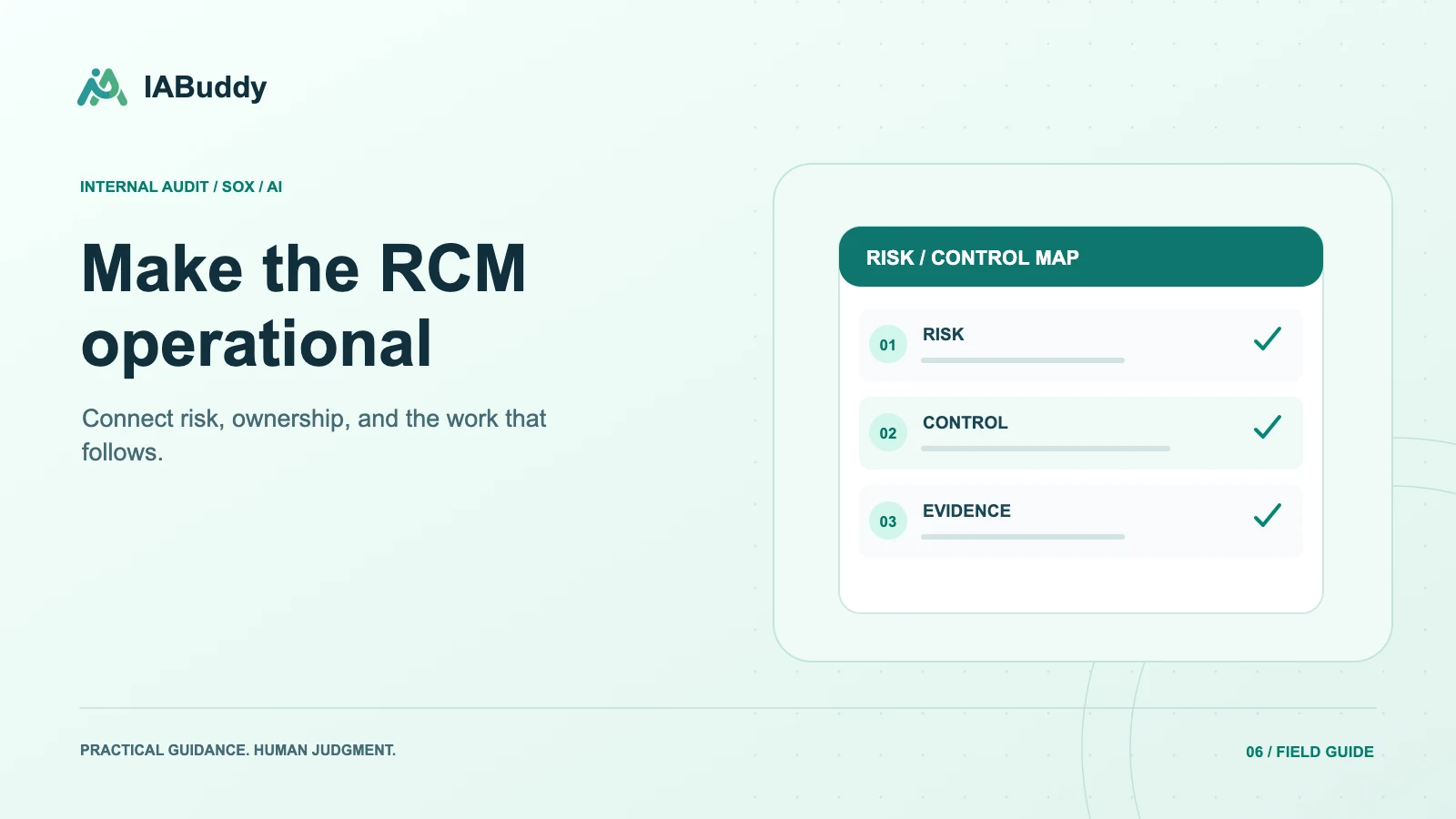
An RCM connects a risk with the controls intended to address it. For a SOX program, the record should make the relevant financial-reporting context clear. The exact fields depend on the program, but inconsistent names and missing ownership make testing difficult regardless of the tool.
| Field group | Suggested fields |
|---|---|
| Identification | Stable control ID, process, entity, system |
| Risk linkage | Risk statement, relevant assertion, scope rationale |
| Operation | Performer, reviewer, frequency, control description |
| Testing | Procedure, population, evidence required, phase |
| Governance | Owner, effective date, version, change approval |
Keep the control description separate from the testing procedure. The business performs the control; the auditor evaluates it. Combining both in a single sentence makes changes and accountability harder to follow.
Clean the spreadsheet before importing
Create a field-mapping document. Standardize owner names, frequencies, status values, and entity identifiers. Identify empty IDs, duplicate records, merged cells, formulas that display differently when exported, and fields that mix several concepts. Preserve a read-only source copy.
Do not delete apparent duplicates until you understand their scope. Two similarly worded controls may operate in different entities or rely on different systems. Conversely, several rows may represent one control copied for different testing phases. Decide how those distinctions should be represented before import.
Validate the import as a controlled change
Reconcile the number of imported controls to the approved source and explain any differences. Check the relationships, not only the row count: risk links, owners, evidence requirements, and active versus retired controls. Sample both simple records and records with long descriptions or unusual characters.
Keep an exception log of fields that could not be mapped. Obtain owner confirmation for substantive changes. Do not begin generating requests from an imported RCM until the team has resolved the errors that could send the wrong request to the wrong person.
Protect the version used in each testing phase
A control may change midway through a year. Retain the version and effective period used for the test rather than silently rewriting an earlier control description. Identify whether the change affects population definition, sample selection, evidence requirements, or the testing procedure.
For example, changing an approval threshold from one amount to another creates a timing question: which threshold applied when the transaction occurred? A workpaper should reference the applicable policy and control version, not simply today's value. This example illustrates version handling, not a recommended threshold.
Connect the RCM to the downstream work
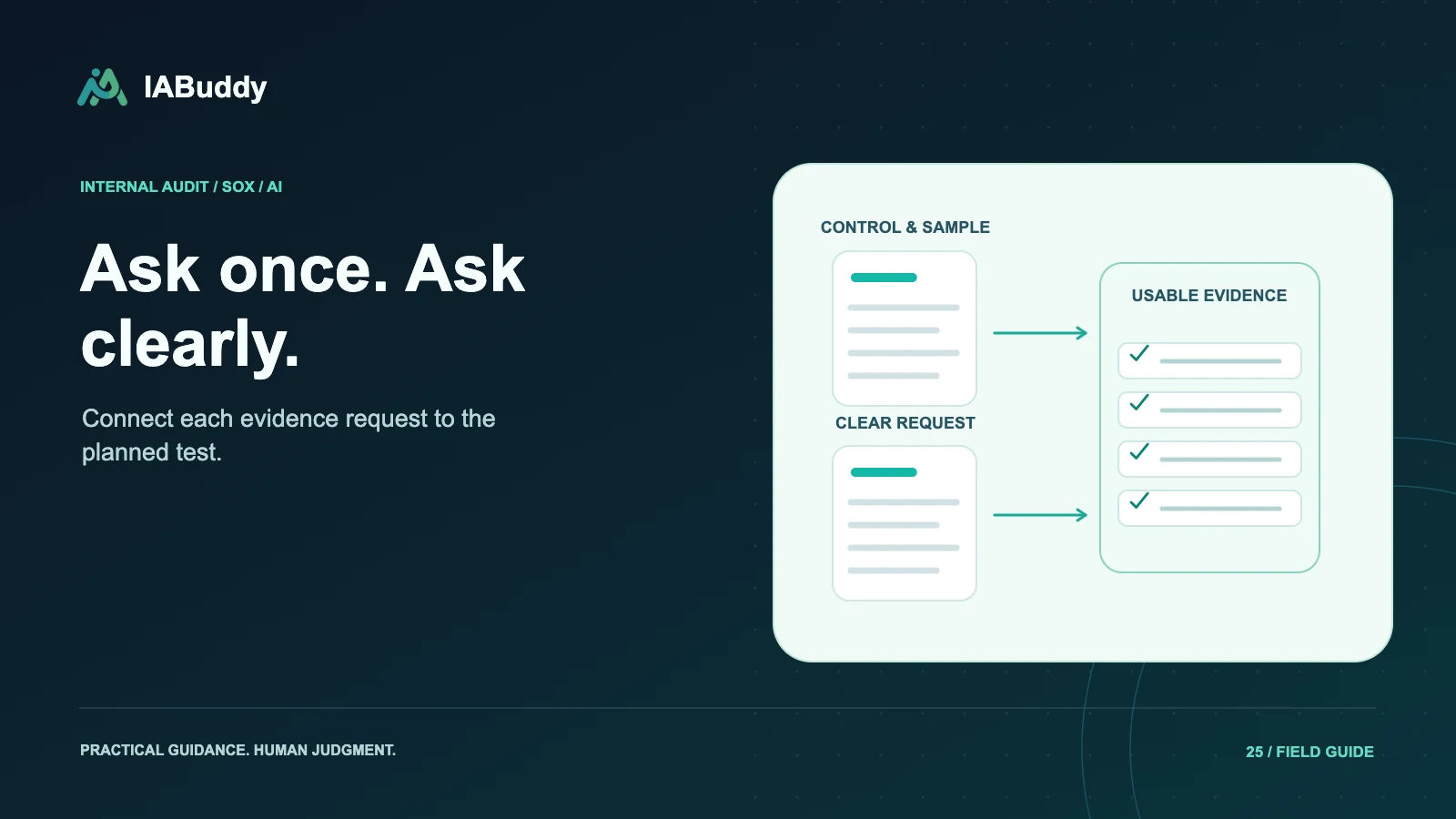
Use stable identifiers to link the control to the sample plan, PBC request, uploaded evidence, attribute results, review notes, and follow-up. A status such as 'tested' should not obscure whether the work is still awaiting review or whether an exception remains unresolved.
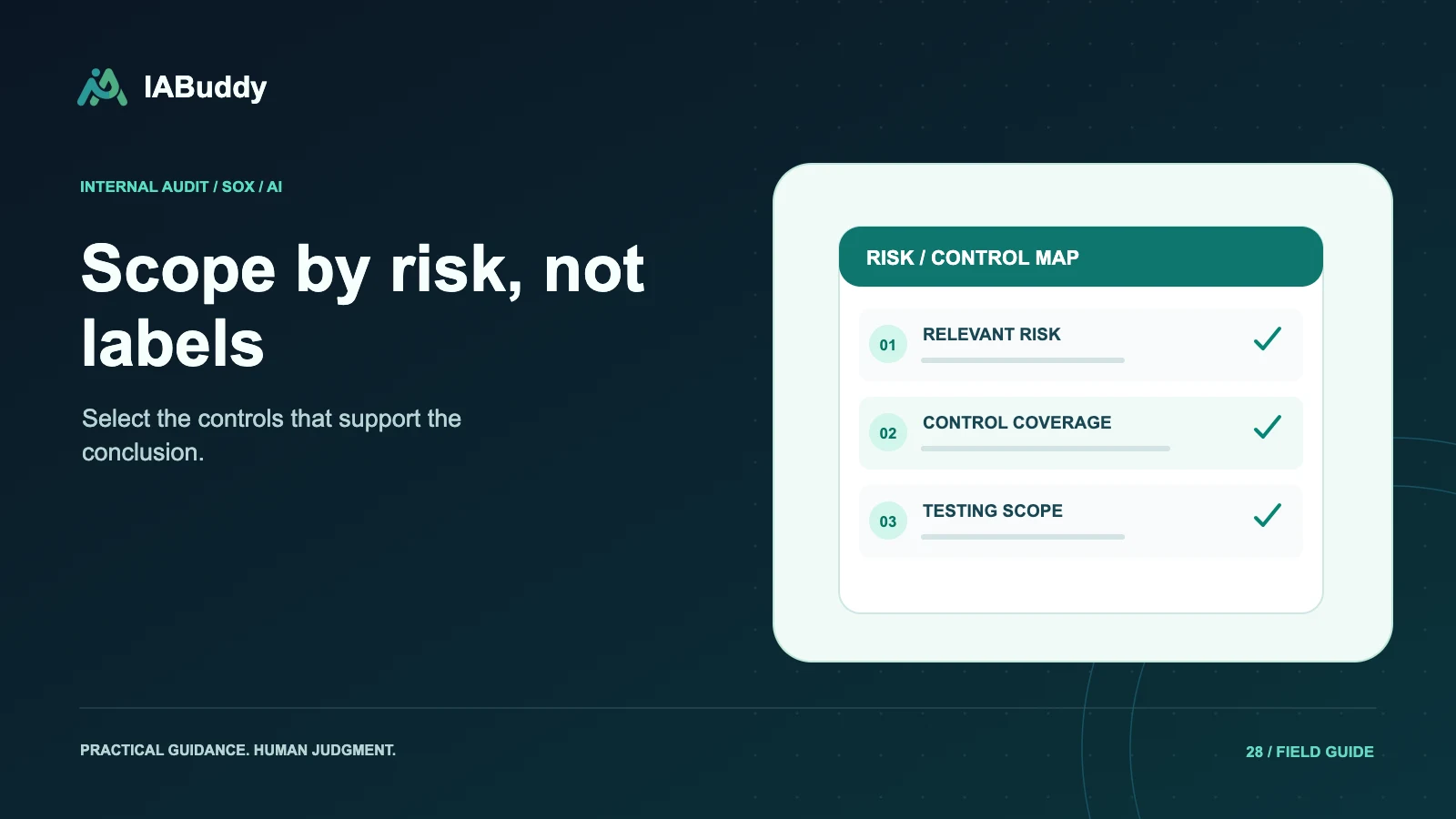
Keep scoping judgments visible. PCAOB AS 2201 provides context for risk-based control selection in an integrated external audit. An RCM's 'key' label is not a substitute for the underlying coverage assessment.
Use AI for drafting, not silent control redesign
AI can suggest clearer wording or highlight missing attributes. Have the control owner and appropriate reviewer approve substantive changes. A rewritten description should not imply that a control performs an activity the business has never implemented.
IABuddy supports importing an existing RCM and connecting it with phase-aware sampling, requests, testing, and review. Demonstrate one complete record through the SOX workflow, including a mid-period change. Keep the migration checklist and reconciliation as part of the implementation record.
Frequently asked questions
Is an RCM the same as a control library?
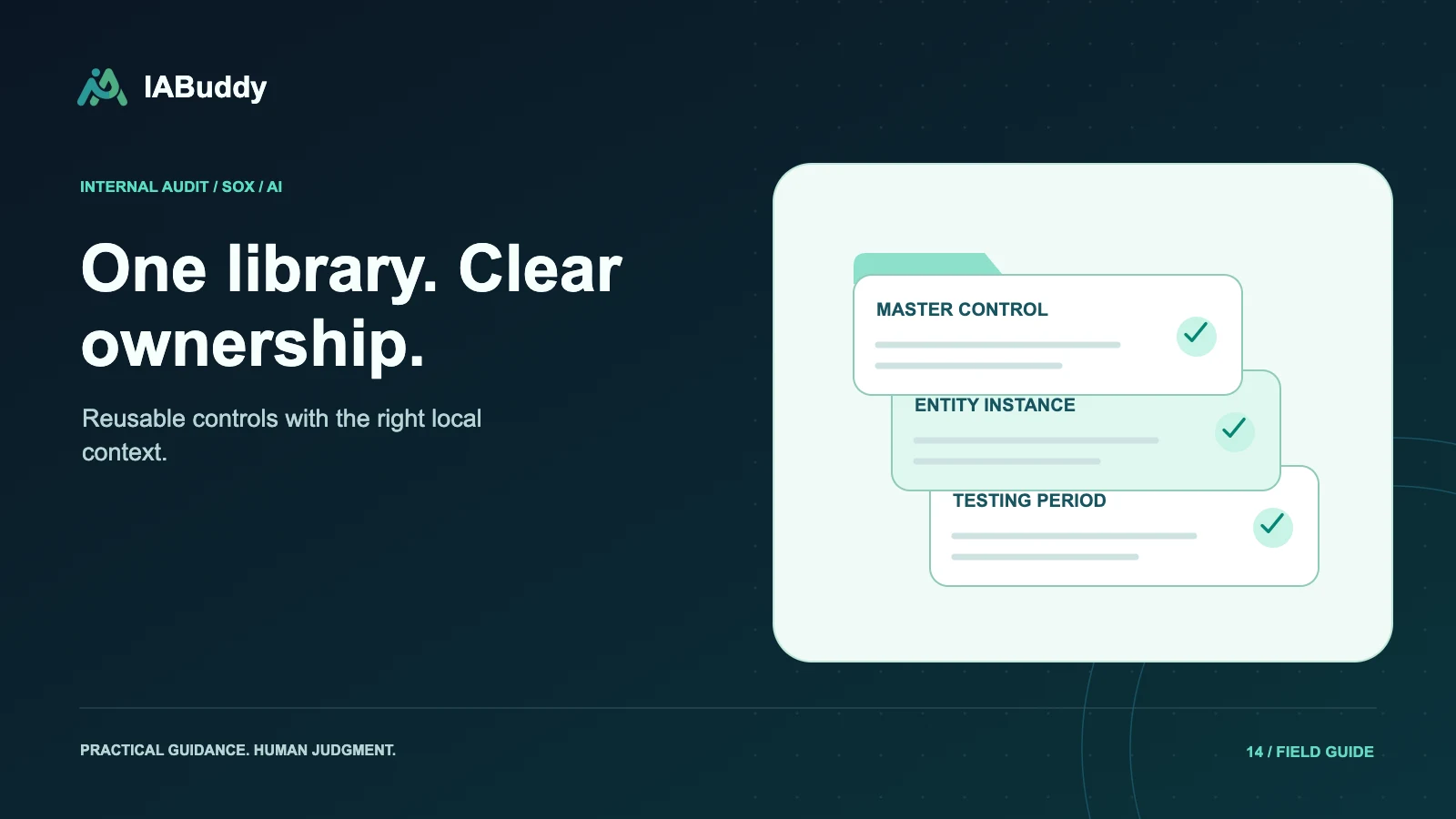
Not exactly. A control library governs reusable control definitions, while an RCM maps controls to specific risks and program context. A well-designed system can connect both without losing entity, period, and testing details.
Can AI decide which RCM controls should be removed?
AI may suggest overlaps, but a qualified reviewer must evaluate risk coverage, dependencies, entity differences, and operating periods before approving removal or reclassification.