Key Takeaways
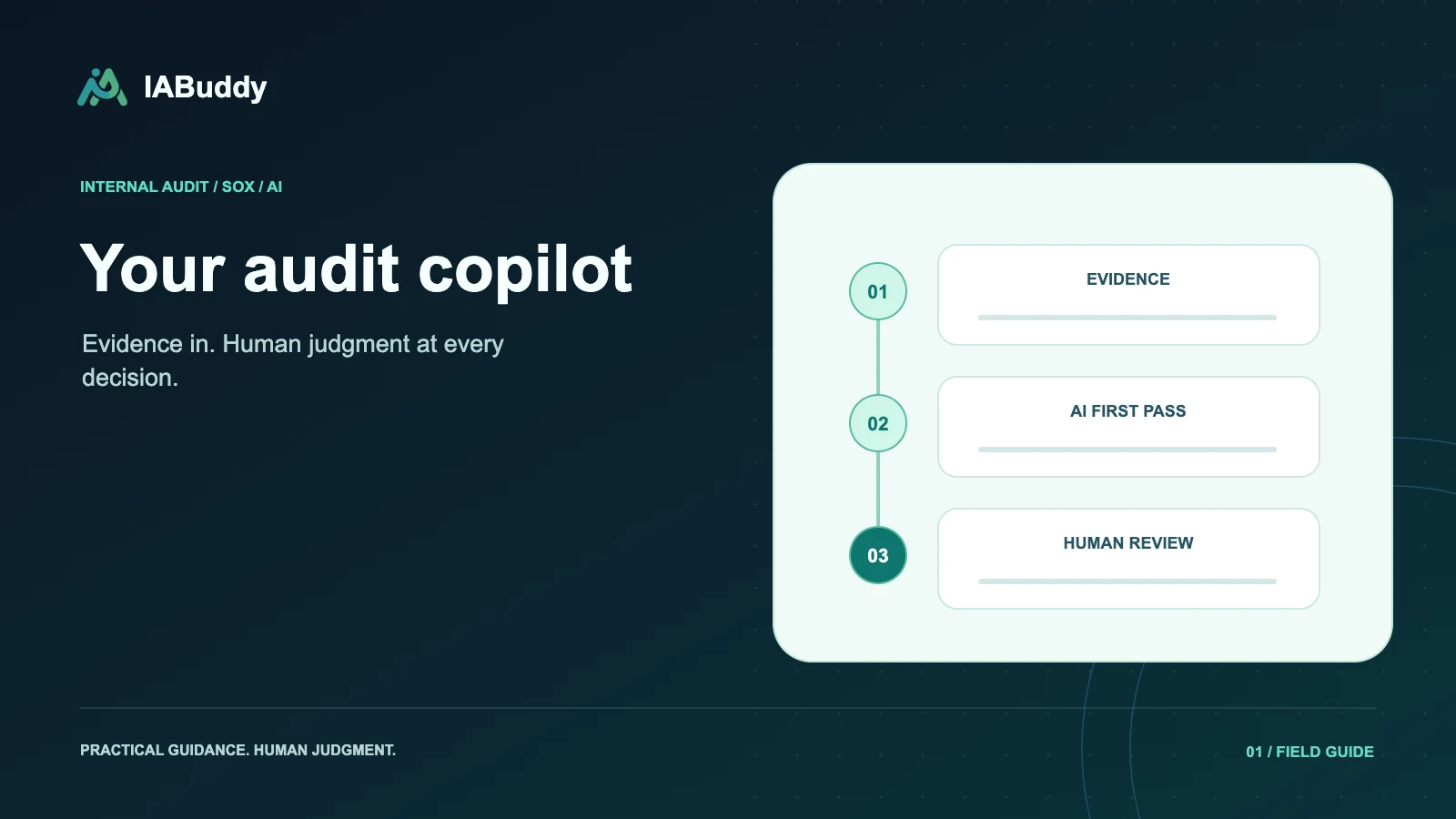
- An AI audit copilot helps auditors interpret evidence, draft testing results, and prepare documentation within a defined audit workflow.
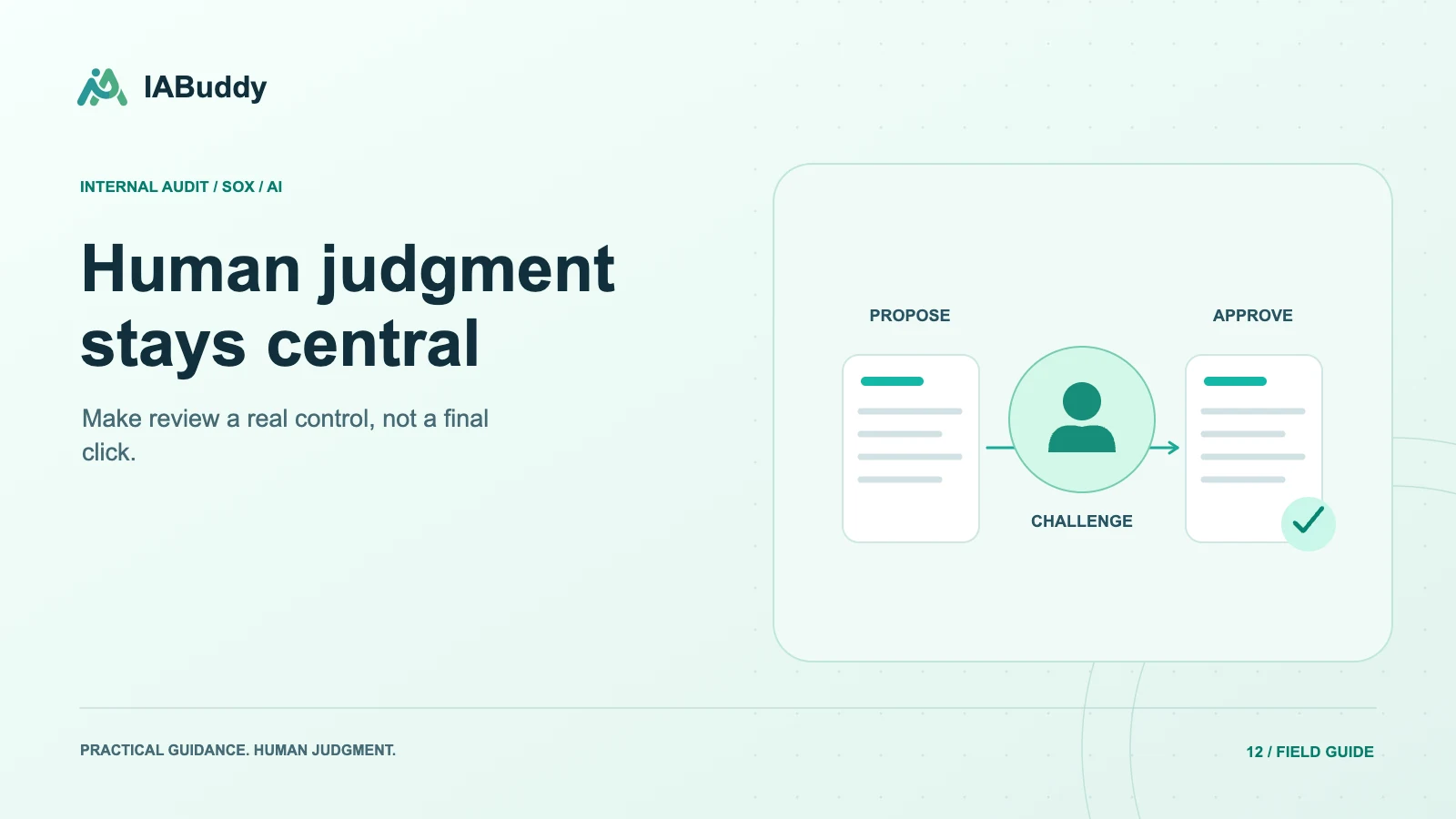
- It is an assistant, not an independent auditor: people set the scope, assess evidence quality, investigate exceptions, and approve conclusions.
- Its value depends on whether reviewers can trace each output to the underlying evidence.
What does an AI audit copilot actually do?
A useful audit copilot works against an explicit task: summarize a process narrative, suggest a control description, extract a date from evidence, compare that date with a testing criterion, or draft a testing memo. Those activities are different from giving an open-ended chatbot a folder and asking whether the company is compliant.
For example, an auditor testing purchase approvals could ask the tool to identify the approver and approval date for selected transactions. The auditor still needs the applicable approval policy, a defensible selection method, and evidence that supports the actual control objective. A confident answer without a source reference is not enough.
Where does it fit in the audit workflow?
| Stage | Useful AI assistance | Human responsibility |
|---|---|---|
| Planning | Draft controls and testing attributes | Approve scope and methodology |
| Evidence review | Extract and reference relevant details | Verify source, period, and completeness |
| Testing | Propose attribute-level results | Resolve ambiguity and exceptions |
| Documentation | Assemble a first-pass narrative | Review procedures and conclusions |
| Follow-up | Draft a targeted evidence request | Decide what additional work is necessary |
The important connection is from the control and sample to the evidence and conclusion. A polished paragraph that loses this connection creates more review work rather than less.
How is a copilot different from automation or a chatbot?
Rules-based automation is appropriate for repeatable steps with clear inputs, such as comparing approved identifiers or calculating elapsed time. Generative AI can help interpret less standardized text, but its interpretation can be wrong. A conversational interface alone does not establish access controls, testing methodology, version history, or a review workflow.
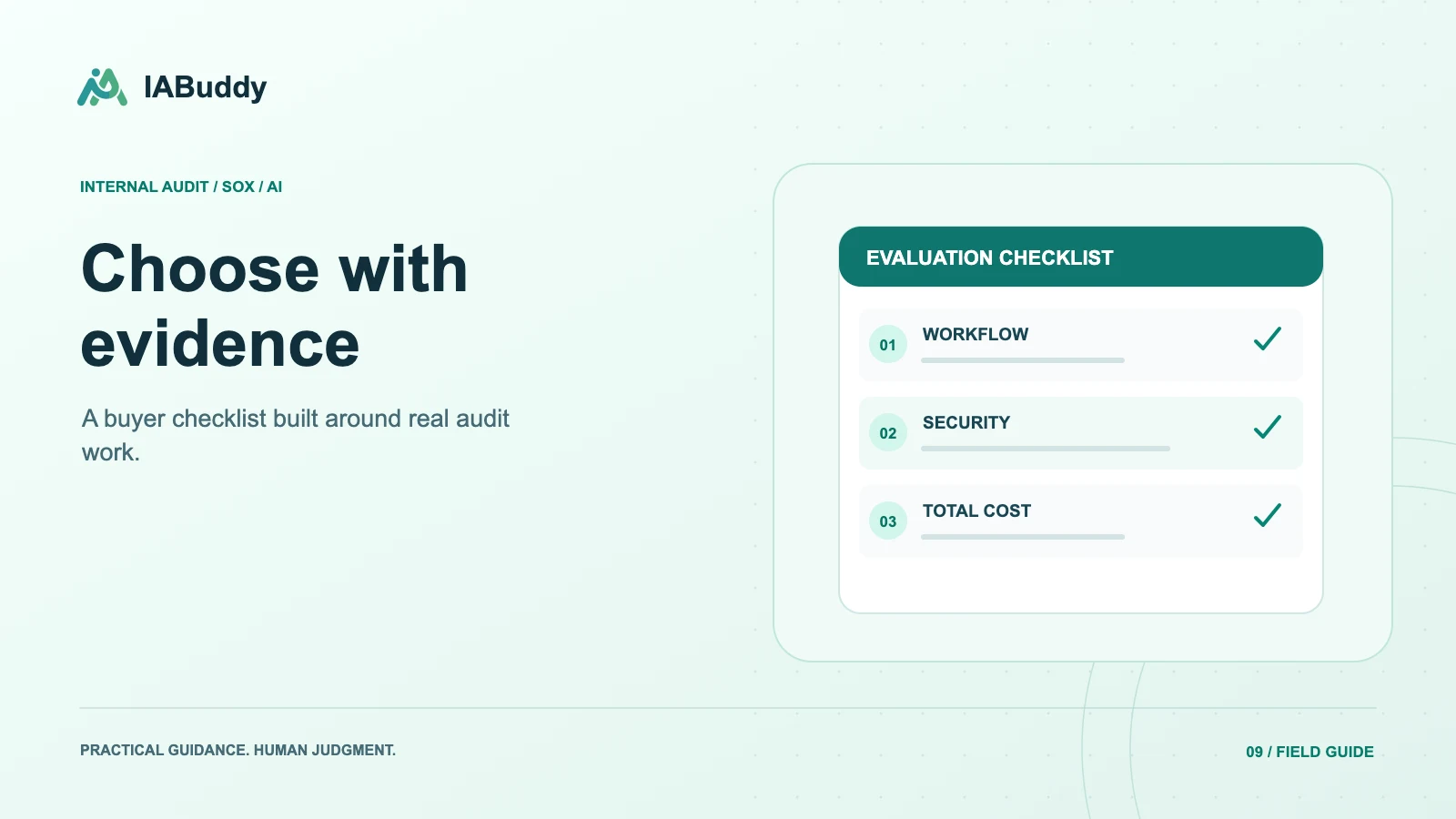
Evaluate the complete application, not just the model demonstration. Ask what happens when evidence is missing, the uploaded file contradicts another file, or a reviewer changes the proposed result. Those cases reveal whether the system supports real audit work.
What can an AI audit copilot not establish by itself?
AI does not make incomplete evidence complete, convert a sample into population-wide assurance, or decide whether a deficiency is material. An uploaded screenshot may show a reviewer name without showing what that reviewer investigated. A model can also confuse transaction identifiers, dates, currencies, or versions.
PCAOB AS 1105 distinguishes the quality and quantity of audit evidence and recognizes different methods of selecting items for testing. Using AI does not remove those underlying evidence considerations. PCAOB standards govern applicable external audits; an internal audit team should also follow its own approved methodology.
How should a team evaluate a pilot?
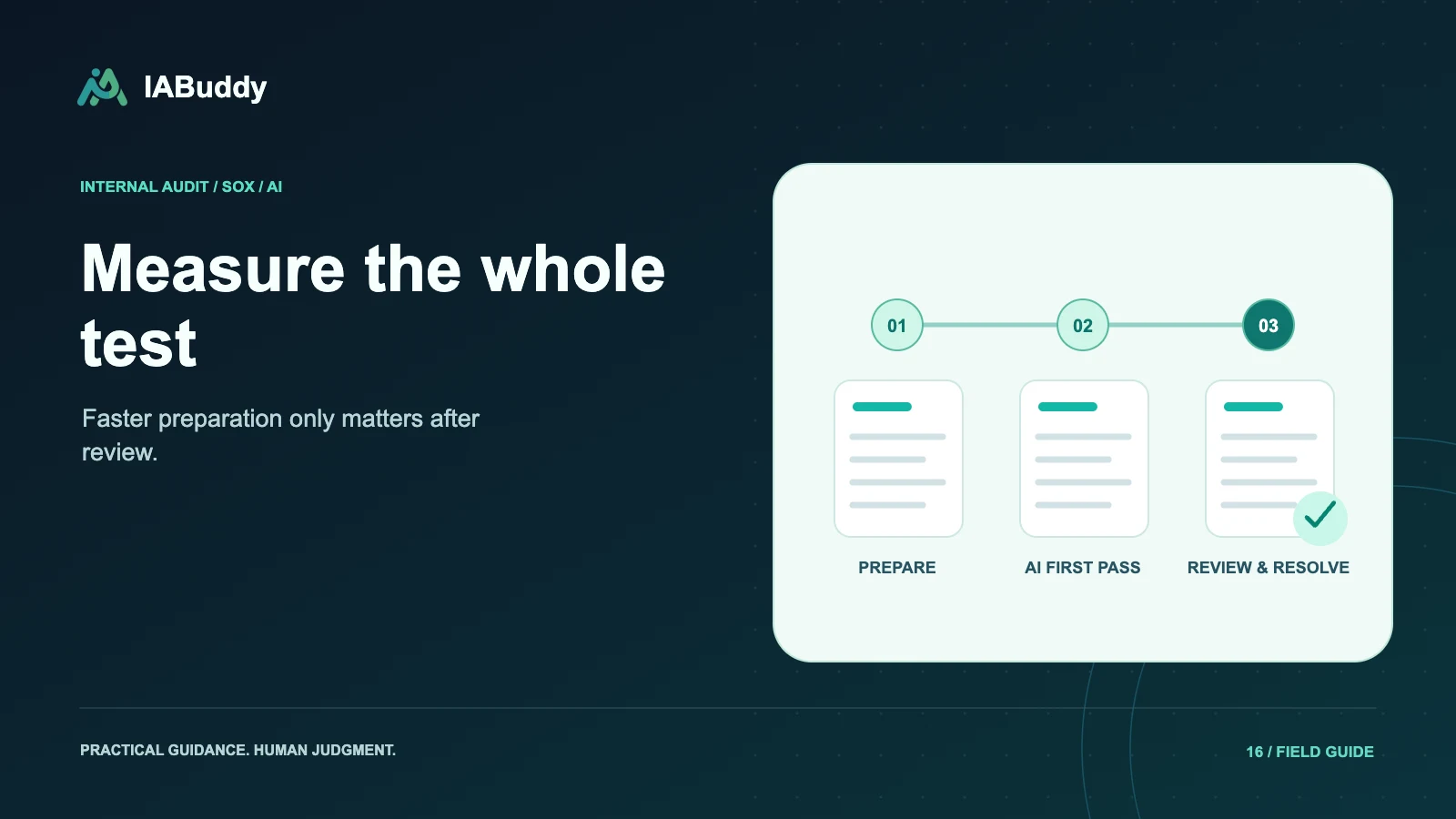
Use a small, representative test set that includes a clean example, a known exception, incomplete support, and an ambiguous match. Have a qualified reviewer establish the expected treatment before comparing outputs. Record preparation time, review time, missed exceptions, incorrect flags, and the effort needed to repair a workpaper.
Keep arithmetic and policy thresholds explicit. Require a reviewer to open the source for important results rather than accepting an AI explanation as proof. Define when a failed or uncertain extraction must return to manual testing. Expand the pilot only when both quality and total effort are acceptable.
How does IABuddy apply this approach?
IABuddy connects RCM and sample planning with PBC requests, evidence-grounded testing, workpapers, review, and follow-up. Its AI can produce a first pass against testing attributes with evidence references, while auditors review and own the conclusion. It is an audit operations workflow, not a promise of autonomous assurance. Explore the AI audit automation workflow using one of your own representative controls.
Frequently asked questions
Does an AI audit copilot replace an internal auditor?
No. It can assist with defined preparation and analysis tasks, but scope, evidence evaluation, professional judgment, and approval remain human responsibilities. Evaluate how the tool preserves those responsibilities in practice.
Does AI control testing always cover every transaction?
No. Coverage depends on the available population, the procedures performed, the selection method, and the tool configuration. Processing every uploaded file does not establish that every relevant transaction or control occurrence was tested.