Key Takeaways
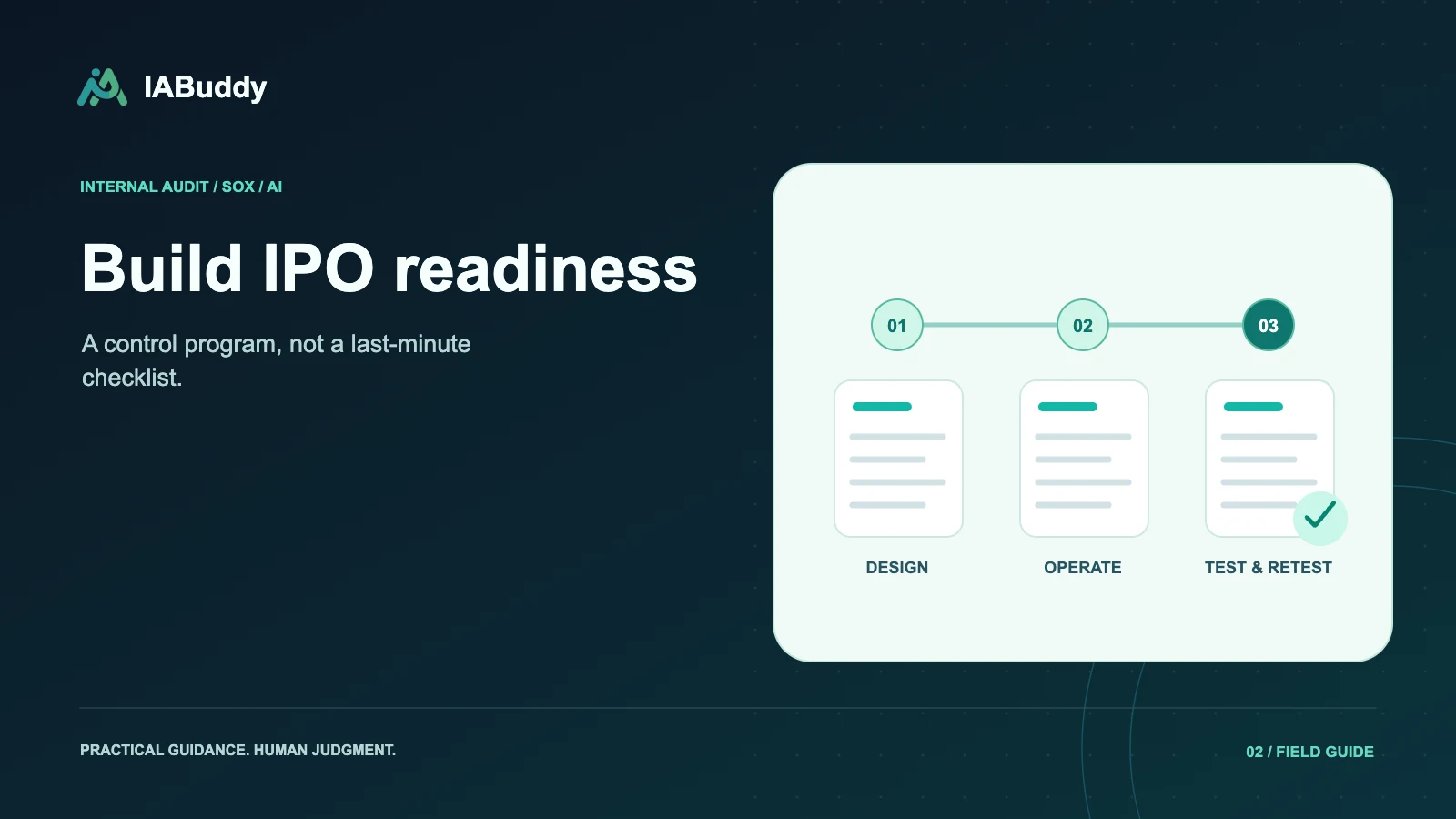
- Pre-IPO SOX readiness means building a repeatable process for documenting, operating, testing, and improving controls over financial reporting before reporting obligations arrive.
- Common pitfalls include unclear ownership, weak management review evidence, unreliable report populations, and insufficient time to retest remediation.
- The applicable reporting and attestation timeline depends on the company's circumstances.
Start with obligations, not a software purchase
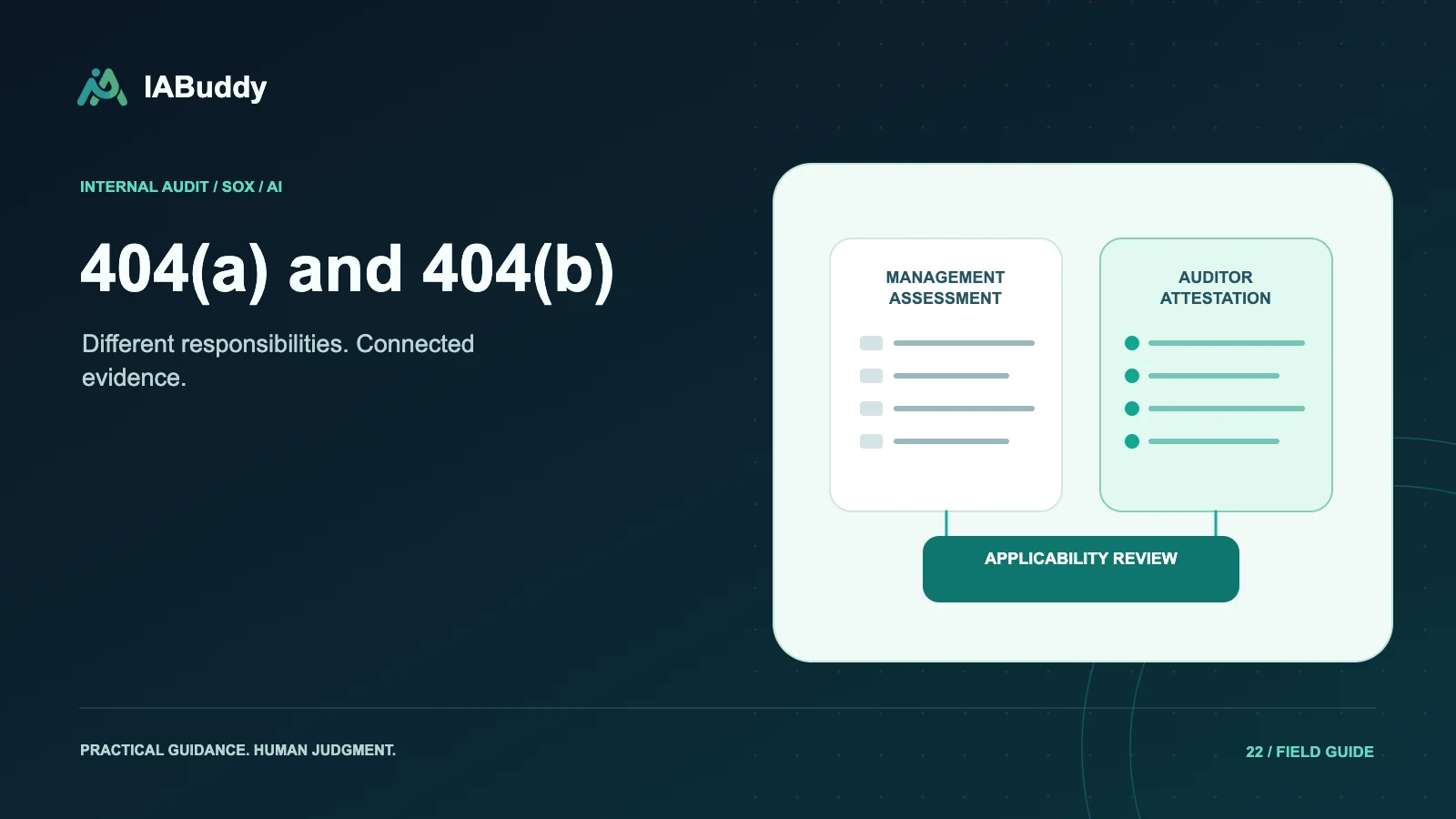
Ask finance leadership, securities counsel, and the external auditor to document the expected reporting timetable and applicable transition provisions. Do not assume every new public company immediately requires the same management report and external attestation. The SEC explains the distinction between filer and reporting status, including implications for internal-control attestation.
Work backward from the relevant reporting dates to the control occurrences and testing evidence the team needs. A quarterly control offers fewer opportunities to demonstrate operation than a daily control. Software can organize that work, but it cannot create historical evidence that never existed.
Pitfall 1: Documenting controls before defining scope
Begin with financial reporting risks, significant accounts and disclosures, relevant assertions, entities, and supporting systems. Then identify controls that address those risks. A large control inventory is not automatically a well-scoped program.
Record why an area is included or excluded and who approved that judgment. Revisit scope after acquisitions, new revenue arrangements, system migrations, and other material changes. Keep the RCM connected to the current process rather than copying last year's labels forward.
Pitfall 2: Treating a signature as a complete review
A management review control should explain what the reviewer compares, the level of detail, thresholds for investigation, follow-up performed, and how unresolved matters are addressed. An approval stamp alone may not show these activities.
For a revenue fluctuation review, retain the report version, relevant parameters, identified variances, explanations challenged, and resolution. Validate whether the information used is fit for the review's purpose; this is a separate task from confirming that somebody signed the file.
Pitfall 3: Starting testing with an unreliable population
Define the period, entity, source system, report logic, and control occurrences before selecting samples. Reconcile the population to an appropriate source and resolve exclusions or duplicate records. Use a selection method consistent with the control and approved methodology.
Sampling is not inherently obsolete. PCAOB AS 2315 addresses audit sampling; the presence of an AI tool does not impose a universal requirement to test every transaction. Do not mistake faster extraction for a sound testing strategy.
Pitfall 4: Leaving remediation until the final review
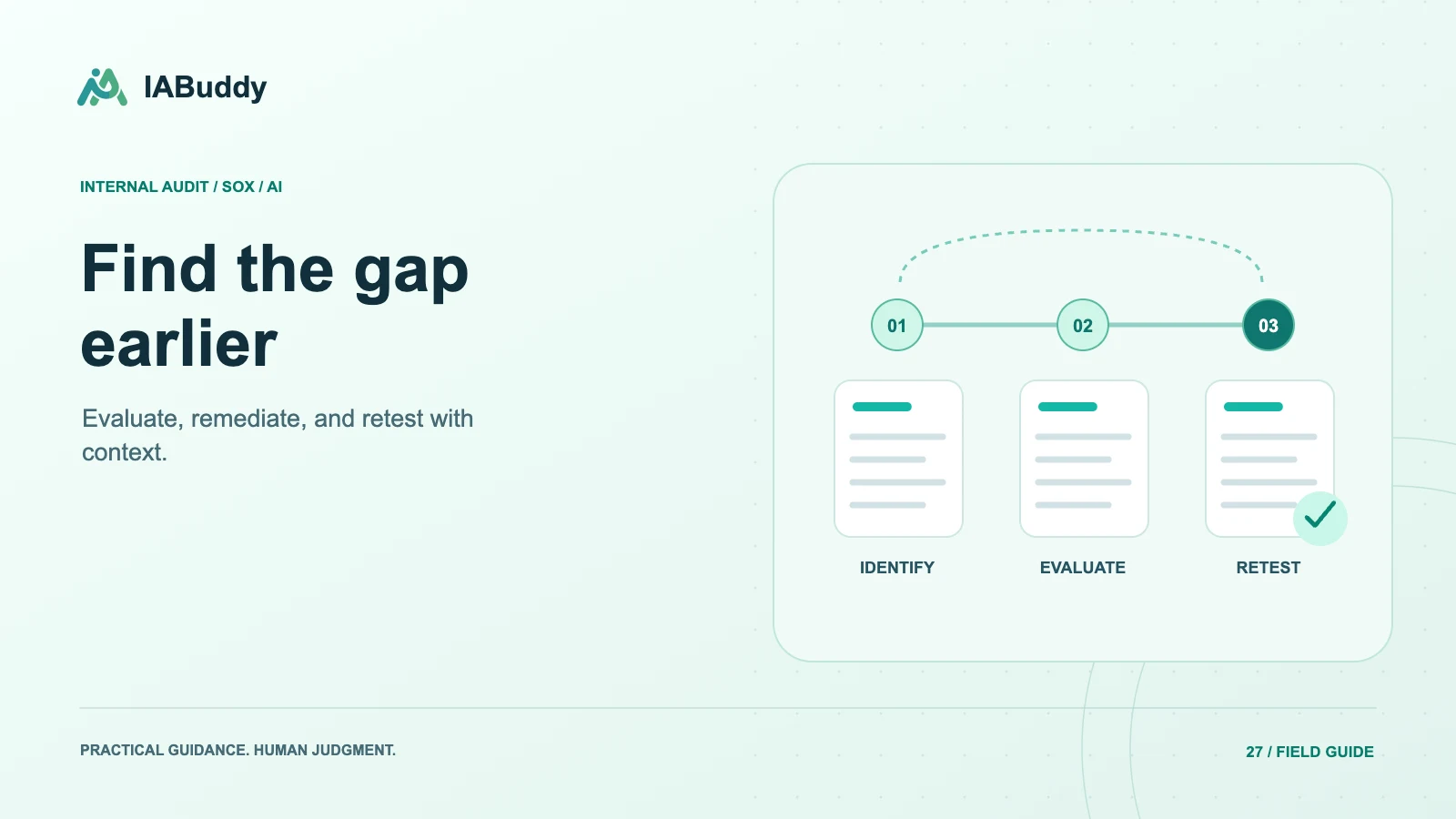
A revised policy is not evidence that the revised control operated effectively. Give management time to implement the change, perform the control, retain evidence, and support a retest. Preserve the original exception and the subsequent remediation record rather than replacing one with the other.
A readiness plan organized around evidence
| Workstream | Useful deliverable | Completion question |
|---|---|---|
| Scope | Approved risk-to-control map | Does each relevant risk have coverage? |
| Design | Walkthrough and control description | Could the control address the risk as designed? |
| Operation | Dated evidence and owner records | Was the control performed as intended? |
| Testing | Procedures, results, and references | Can a reviewer understand the conclusion? |
| Remediation | Action, owner, due date, and retest | Has the change operated and been evaluated? |
Use this as a planning template, not a prescribed regulatory timetable. Prioritize gaps that could prevent a meaningful testing cycle.
Where IABuddy fits
IABuddy can organize the RCM, phase-aware sampling, requests, testing evidence, review, and follow-up in one workflow. Start with an existing control and demonstrate how its records remain connected through review. The pre-IPO SOX solution supports readiness work; it does not determine legal applicability, certify compliance, or replace the external auditor's judgment.
Frequently asked questions
How early should SOX readiness begin before an IPO?
Begin early enough to design controls, operate them for the relevant periods, test them, and remediate and retest gaps. The timetable depends on process maturity, control frequency, systems, and reporting requirements; a universal number of months can be misleading.
Does buying SOX software make a company IPO-ready?
No. Readiness also requires ownership, appropriate control design and operation, reliable information, testing, and management evaluation. Software supports these activities but cannot substitute for them.