Key Takeaways
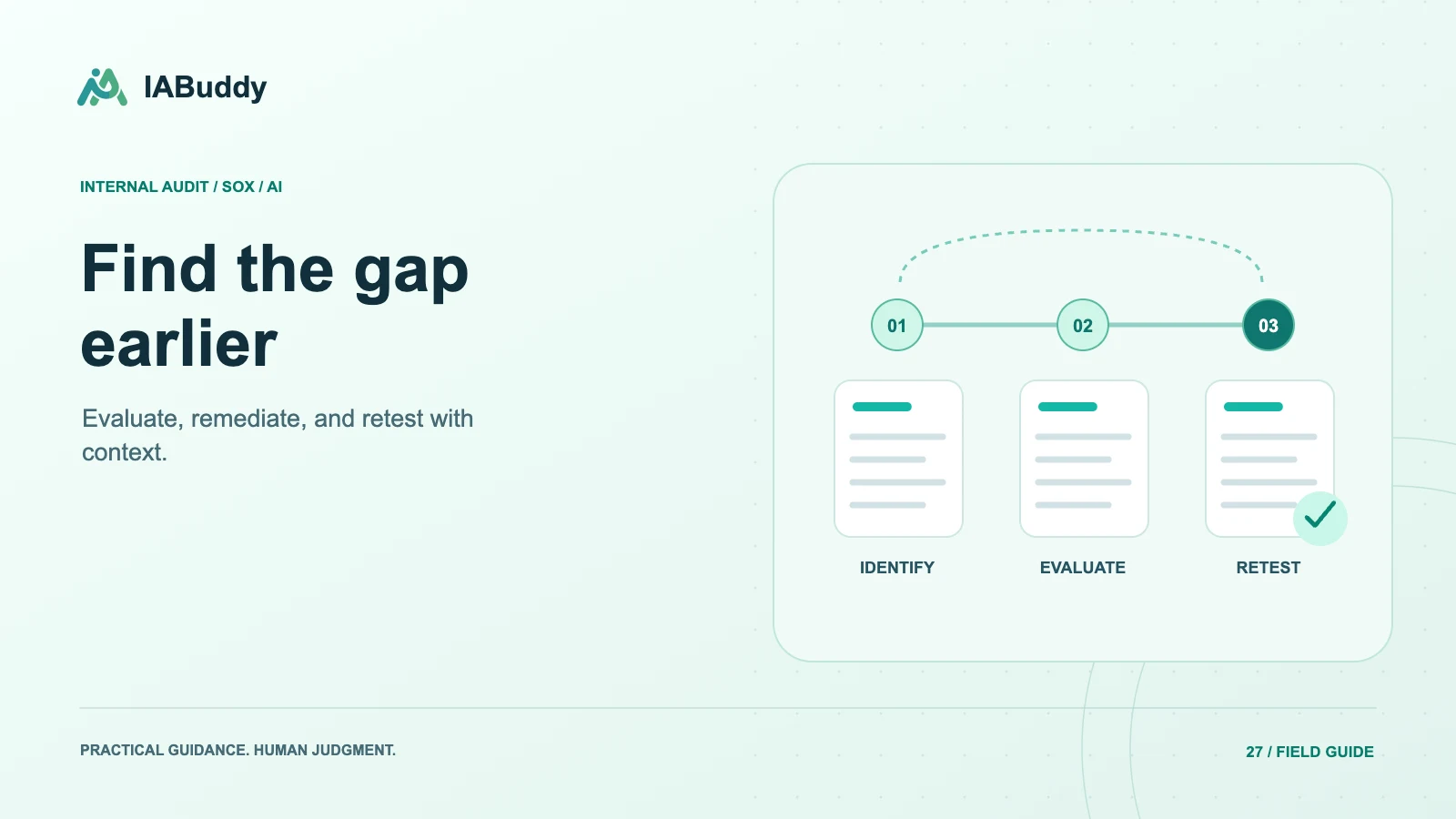
- Identify material-weakness risk earlier by reassessing financial-reporting risks, evaluating control design and operation, investigating related exceptions, and allowing time to remediate and retest.
- A material weakness concerns the possibility of a material misstatement not being prevented or detected promptly.
- No software or monitoring process can guarantee that material weaknesses will never occur.
What distinguishes a material weakness from an exception?
A testing exception is an observed deviation or evidence issue that requires evaluation. It does not automatically establish a material weakness. Severity depends on the nature of the deficiency, likelihood and potential magnitude of misstatement, and related circumstances.
PCAOB AS 2201 provides definitions and the external-audit framework for evaluating deficiencies, including their combined effect. Management and auditors should assess the facts rather than assigning severity based only on the number of failed samples.
Revisit risk when the business changes
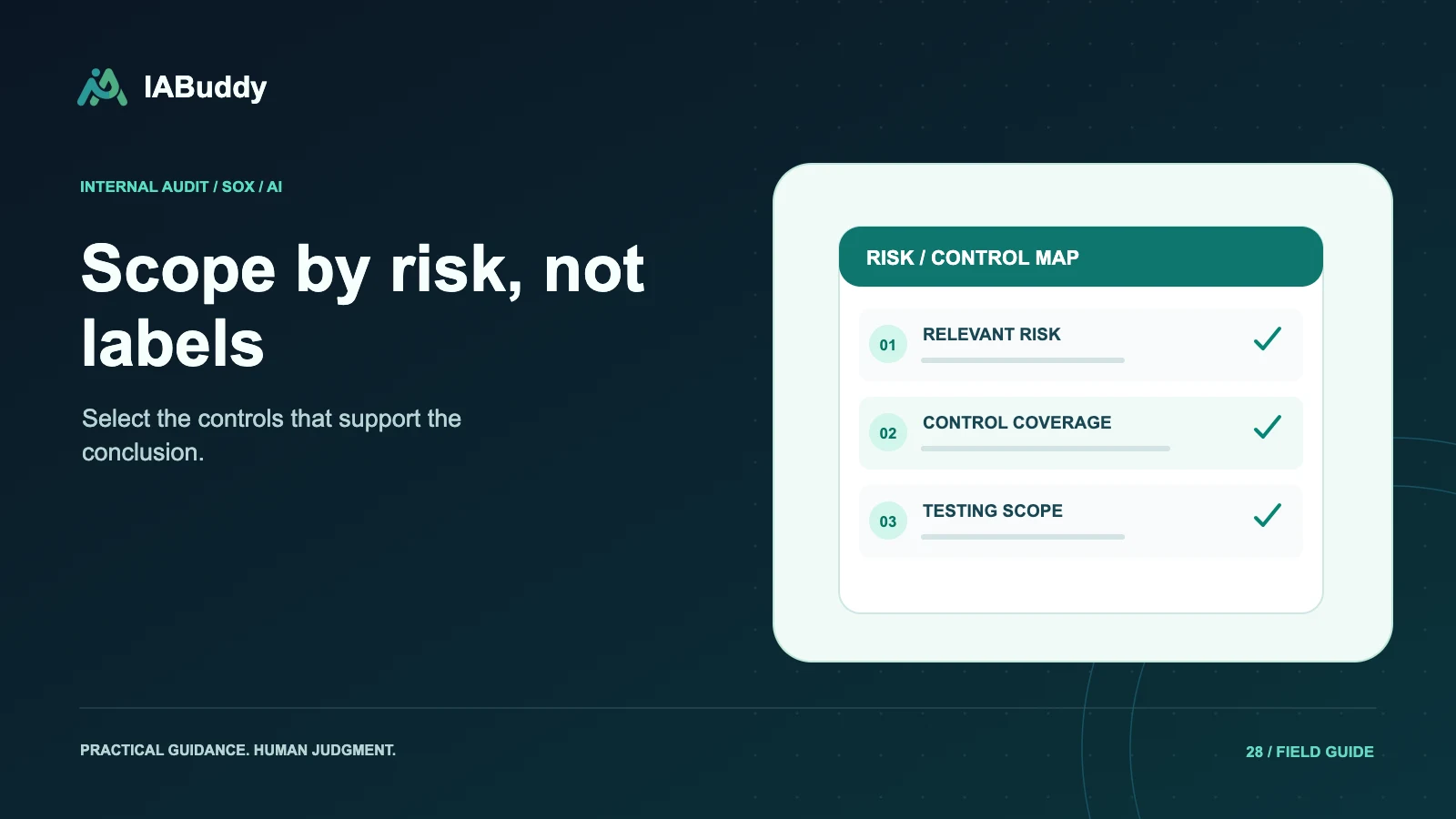
Acquisitions, new revenue arrangements, system implementations, reorganizations, and changes in key personnel can alter the control environment. Identify which controls and reports depend on the changed process. A previous year's passing test does not establish that the redesigned process works.
Maintain a change log that connects the event to affected risks, controls, owners, and testing. Prioritize changes that could leave a significant reporting risk without a clearly operating control.
Examine the precision of management reviews
A review control should make clear what is examined, how differences are identified, what thresholds or criteria apply, and how questions are resolved. A signature without the supporting investigation may not show the work the control is supposed to perform.
For a hypothetical reconciliation review, inspect the report used, unusual items considered, supporting explanations, and follow-up. Evaluate whether the review operates at a level that addresses the relevant risk rather than assuming executive involvement makes it sufficient.
Validate the information controls depend on
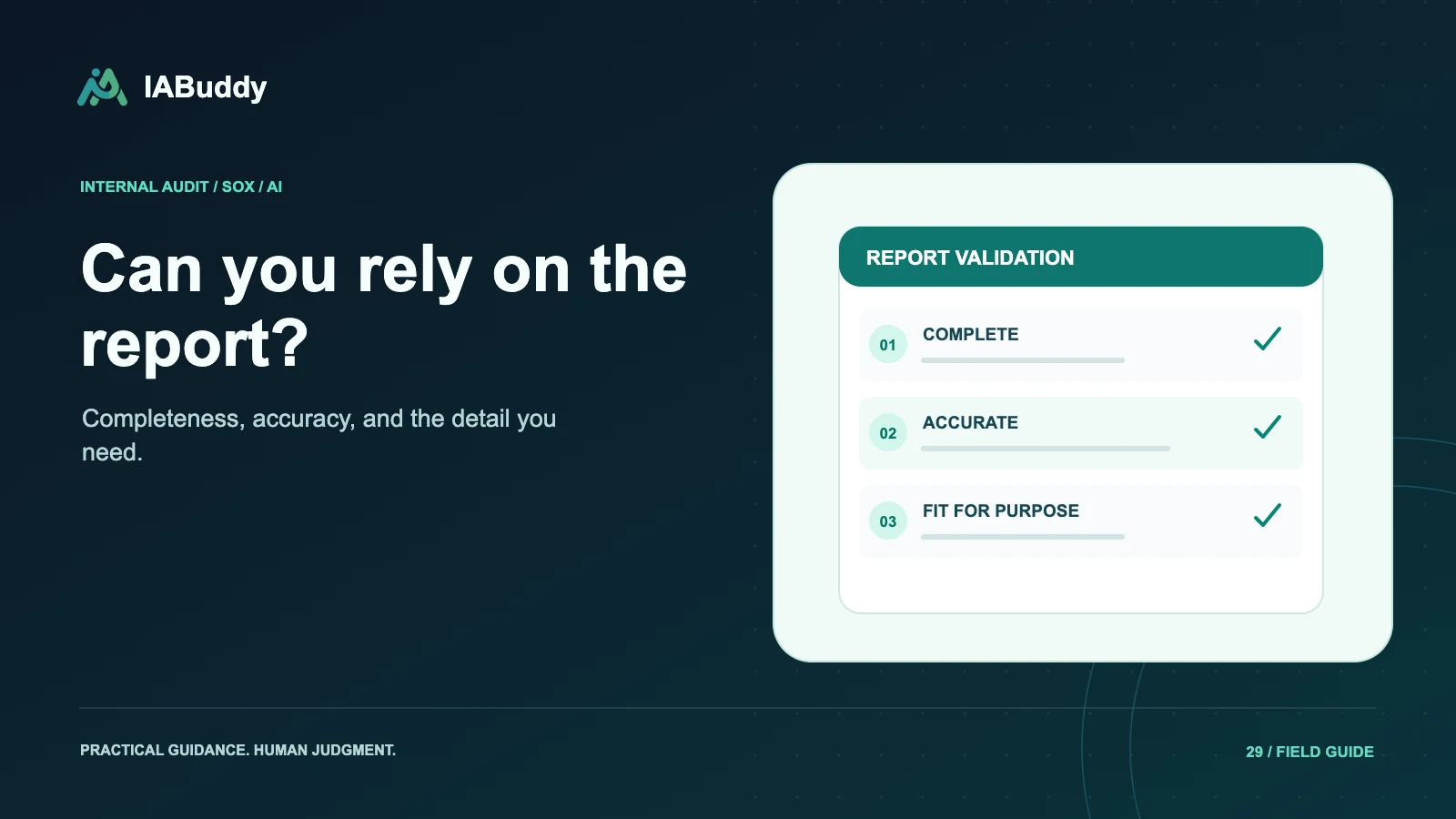
Review the source, parameters, logic, and relevant controls over reports used in testing or management review. A correctly performed review can still be undermined by an incomplete report.
PCAOB AS 1105 addresses evaluation of company-produced information used as audit evidence. Keep report reliability work connected to, but distinct from, the test of the business control.
Manage issues as connected records
| Record | What to capture |
|---|---|
| Observed condition | Facts, period, affected process, and evidence |
| Evaluation | Risk, related deficiencies, and severity rationale |
| Action plan | Management owner, corrective action, and due date |
| Implementation | What changed and when |
| Retest | Relevant operation, procedures, results, and review |
| Closure | Supported decision and remaining limitations |
Keep the original exception visible. Do not replace it with a revised policy or a 'complete' status that hides the initial issue.
Allow time for remediation to operate
Changing a control description is not the same as implementing the change. An implemented control may need to operate before meaningful retesting is possible. Coordinate timing with the control's frequency, reporting dates, and the nature of the issue.
Also evaluate whether a look-back or additional procedure is needed for the period before remediation. Fixing today's configuration does not by itself resolve the consequences of an earlier gap.
How IABuddy supports earlier follow-up
IABuddy links testing results with follow-up requests, new evidence, retesting, and remediation context. This can help the team keep an issue understandable across handoffs. It is not a production security monitor, a guarantee against material weaknesses, or an automatic severity decision-maker.
Use the SOX workflow to demonstrate an exception through review and retest. Discuss reporting and disclosure obligations with the company's qualified advisers; do not assume resolving a workflow task resolves every accounting or legal consequence.
Frequently asked questions
Does one failed control sample mean there is a material weakness?
Not automatically. Evaluate the deficiency's nature, likelihood and potential magnitude of misstatement, compensating or related controls, and other relevant facts under the applicable methodology.
Is a revised policy enough to close remediation?
Not by itself. The team needs evidence of implementation and, where appropriate, operation and retesting. Closure should explain why the action addresses the original issue and any remaining limitations.