Key Takeaways
- Five useful candidates for audit automation are request preparation, evidence intake, first-pass attribute testing, workpaper drafting, and exception follow-up.
- Choose processes with clear inputs and review criteria.
- Automate the repetitive work while preserving human decisions about scope, evidence sufficiency, exceptions, and final conclusions.
1. Prepare focused evidence requests
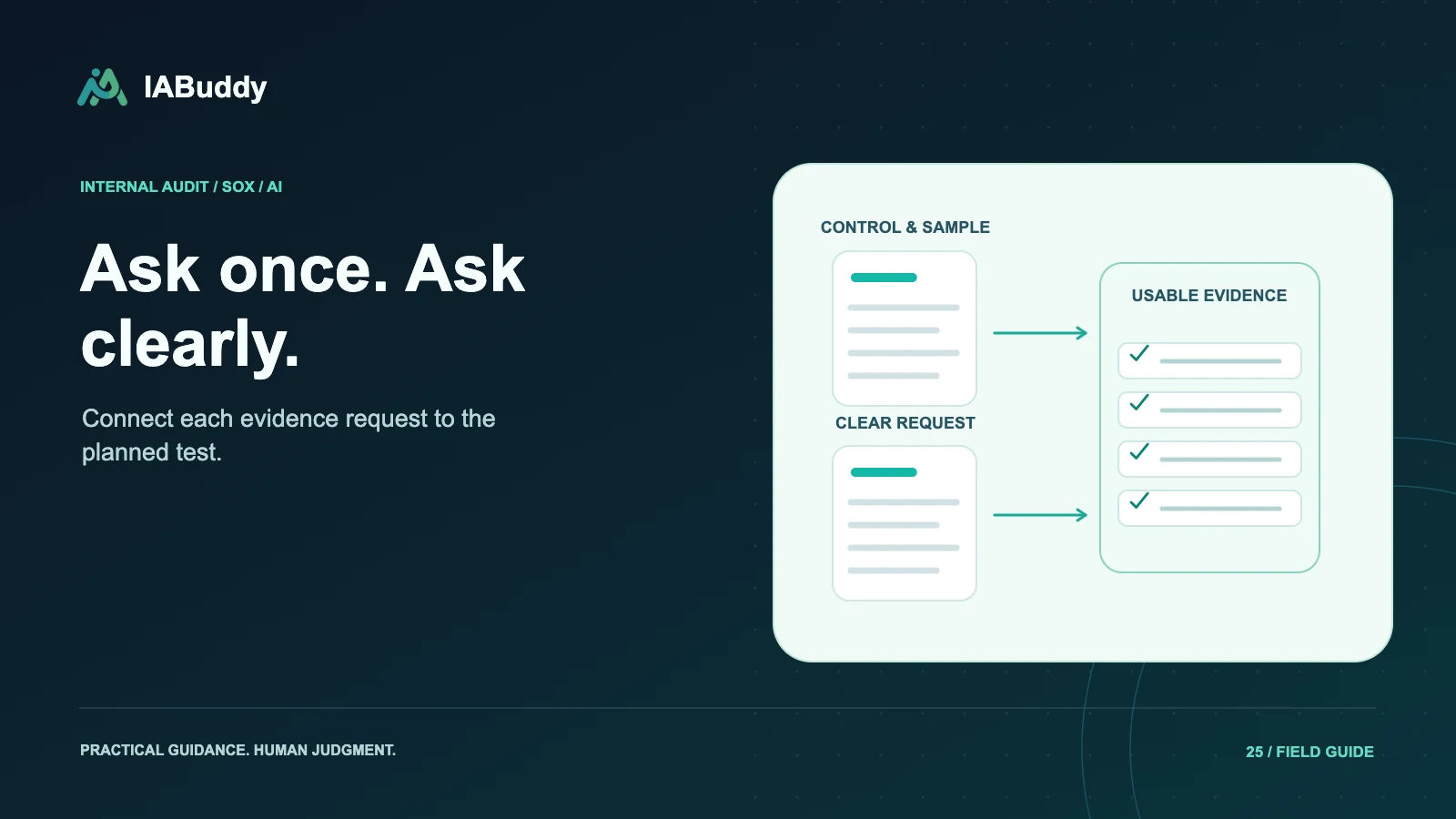
Use approved control descriptions, testing attributes, periods, and sample requirements to draft requests. A useful request tells the owner what to provide, for which period and entity, and why the information is needed. The auditor should check recipients and scope before sending.
Measure repeated clarification requests and the time from request to usable support. An automated message that asks for the wrong file only creates a faster version of the original problem. In IABuddy, phase-aware sampling and PBC preparation can keep the request connected to the planned work.
2. Organize evidence at intake
Classify files, associate them with the intended request or sample, and identify missing context. Automation can help with extraction and organization, but ambiguous matches need a review queue. Preserve original artifacts and distinguish replacements from duplicates.
A file's presence does not establish completeness. For example, a user listing may cover only one application or a different reporting date. Intake checks should make these limitations visible before testing starts.
3. Produce a first pass against defined attributes
AI can help locate supporting details and propose attribute-level results. Use explicit criteria and require source references. Keep calculations, date conventions, and policy thresholds clear enough to validate independently.
The human reviewer should investigate unmatched records, contradictory evidence, and proposed exceptions. Test known failures during the pilot, not only clean cases. A process that finds expected passes but misses important failures is not ready simply because it is fast.
4. Draft workpapers from the testing record
Reduce repeated entry by drafting the memo from actual procedures, evidence, results, and review notes. Check that the narrative does not add procedures that were never performed or imply broader coverage than the test supports.
A useful draft distinguishes facts from interpretation and identifies unresolved limitations. PCAOB AS 1215 provides applicable external-audit documentation context. Neither a template nor an AI-generated narrative guarantees compliance with the engagement's requirements.
5. Draft and track exception follow-up
Use the failed attribute and its evidence context to prepare a specific follow-up request. Retain the original result and link any new support or retest. The auditor decides whether the response resolves the question, changes the conclusion, or requires escalation.
Do not equate a completed action with effective remediation. Management may need to operate a revised control and provide evidence before the team can evaluate closure.
How should you prioritize these candidates?
| Criterion | Useful question |
|---|---|
| Repeatability | Does the team perform the same defined steps regularly? |
| Evidence quality | Are the required inputs available and understandable? |
| Reviewability | Can a reviewer verify the output efficiently? |
| Impact | Does the task consume meaningful time or create rework? |
| Risk | What happens if the automation is wrong? |
Start with a bounded use case rather than automating an entire audit at once. Assign an owner, specify acceptance criteria, and preserve a fallback process.
Measure a completed workflow, not isolated speed
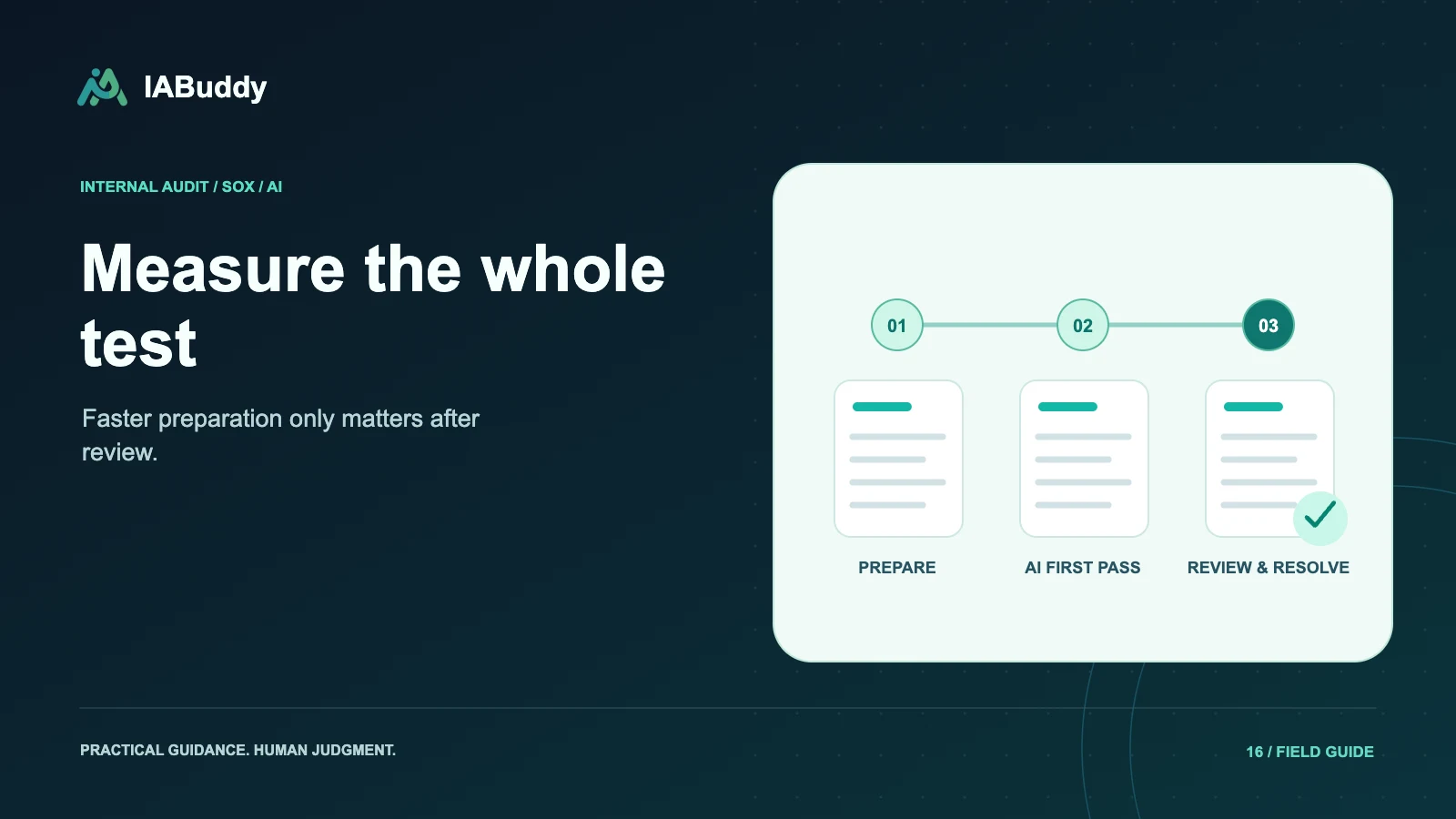
Record setup, preparation, processing, review, correction, and follow-up effort. Also track source-reference accuracy, missed exceptions, and reopened review notes. Use comparable controls and evidence complexity when evaluating the result.
IABuddy's AI audit automation workflow connects these activities. Test the sequence from RCM and sample planning to a reviewed result and follow-up. The objective is less avoidable handling and clearer accountability, not a claim that professional judgment has been automated away.
Frequently asked questions
Should we automate risk assessment before evidence handling?
Not automatically. Risk assessment involves substantial judgment. A well-defined evidence or documentation task may provide a more bounded first pilot, depending on the team's actual bottleneck and available data.
Does automation mean no manual work remains?
No. Exceptions, unclear evidence, changing processes, review, and final judgment still require people. Plan for those activities rather than treating them as failures of the automation strategy.