Key Takeaways
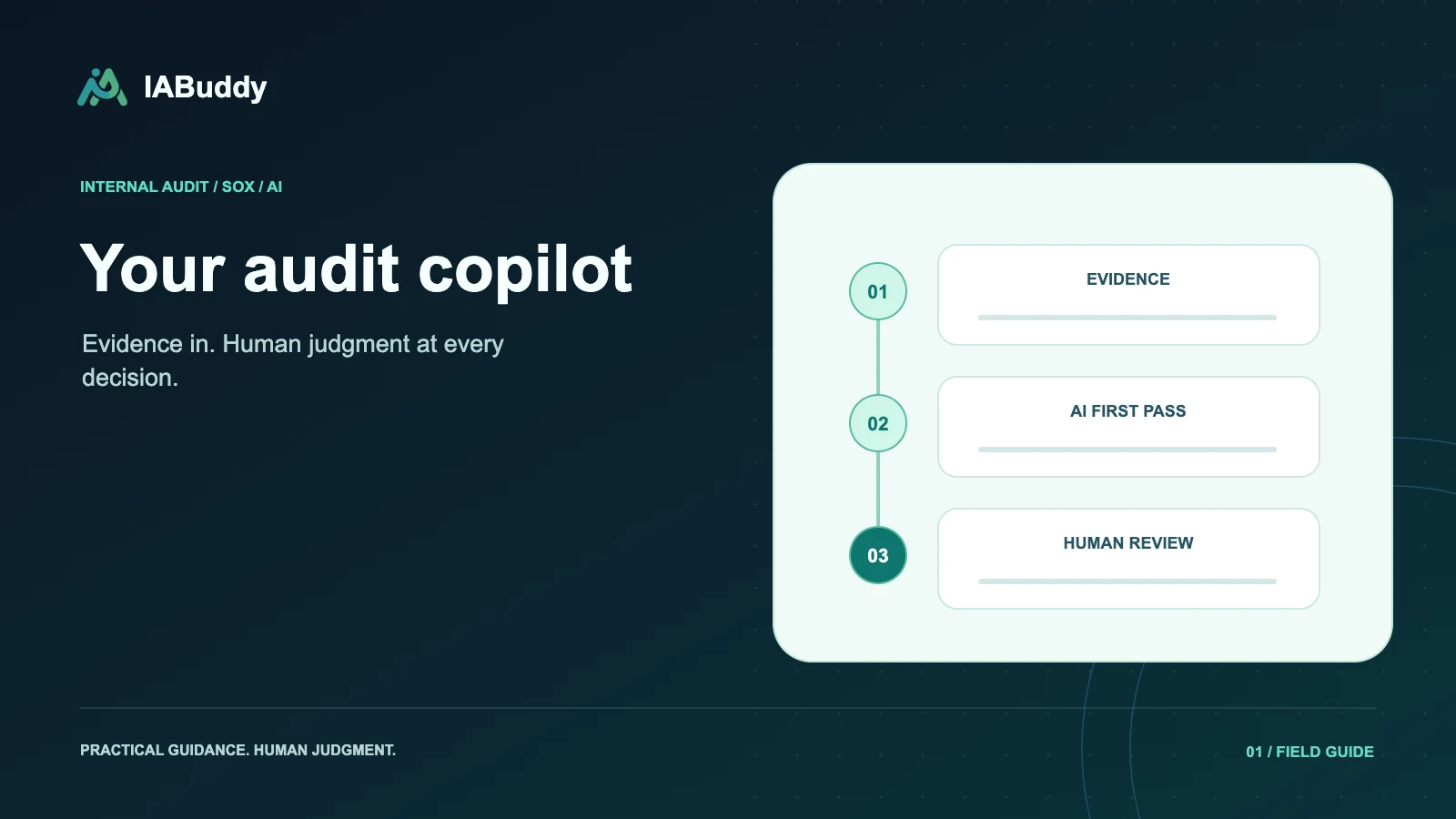
- Agentic AI can reduce SOX testing effort by coordinating defined steps such as locating evidence, evaluating attributes, preparing a workpaper draft, and identifying follow-up needs.
- The benefit depends on evidence quality and review requirements.
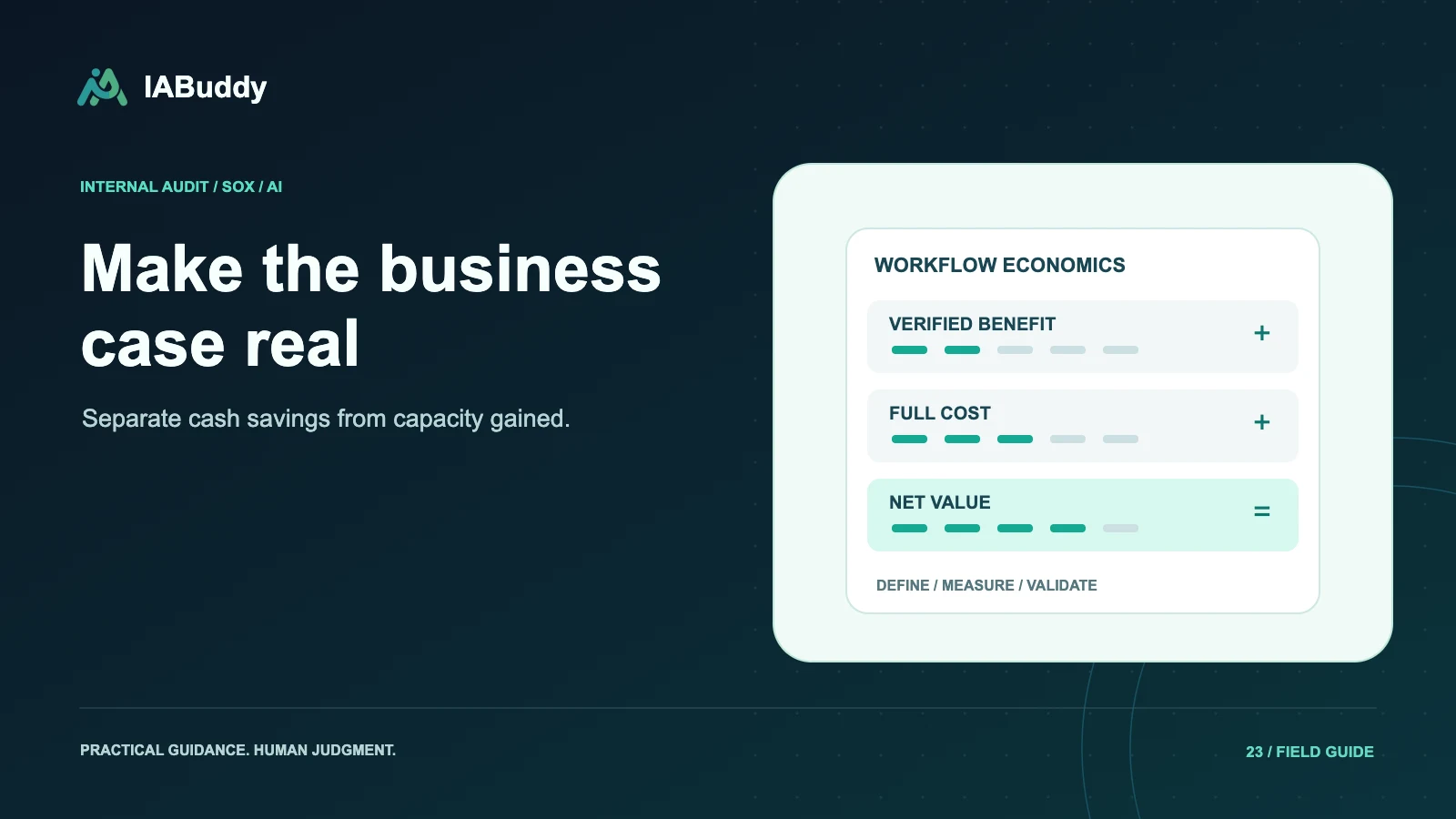
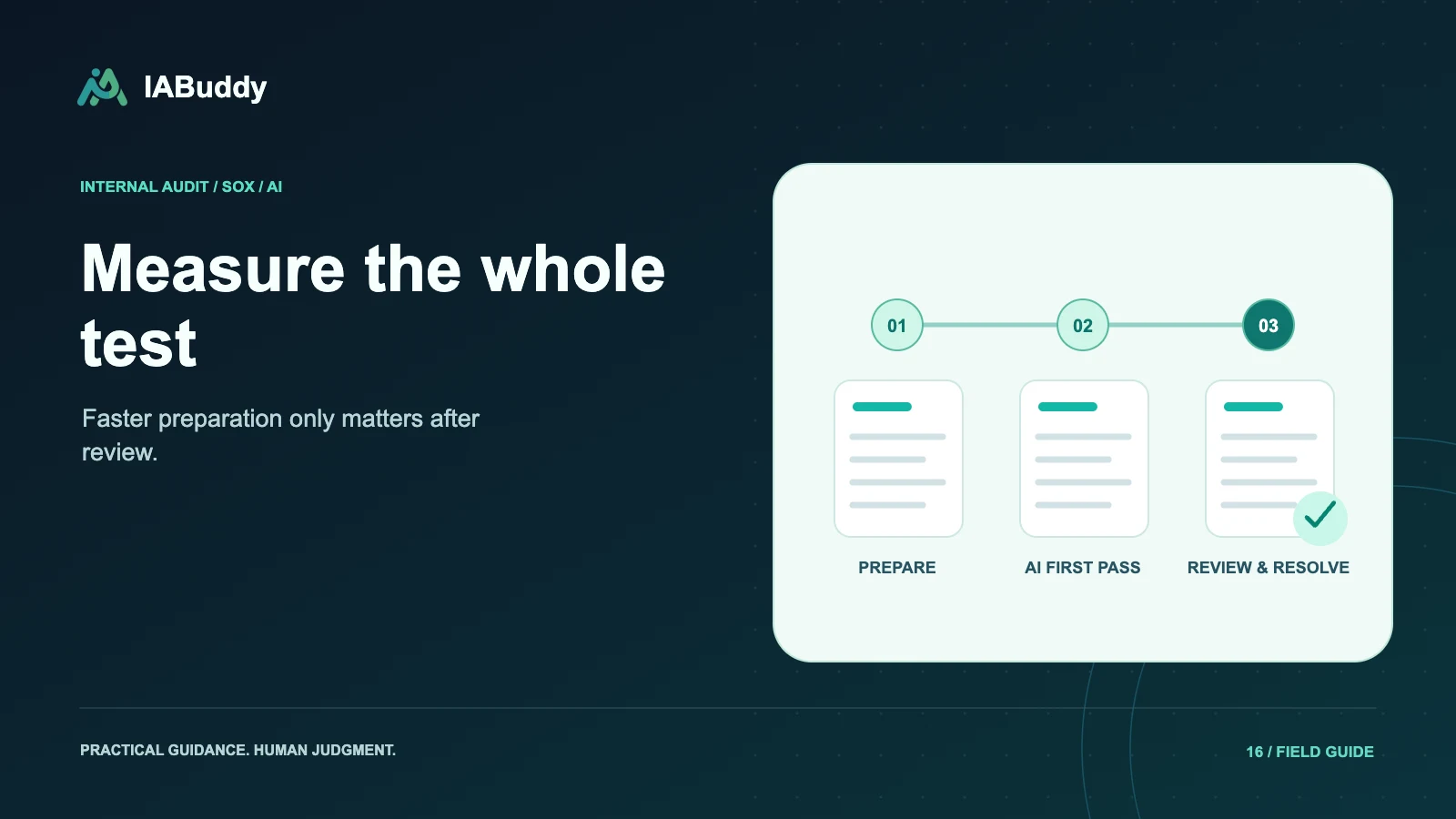
- Measure total setup, preparation, review, correction, and follow-up time; model processing time alone is not a testing-cycle benchmark.
Where does SOX testing effort actually go?
A test may involve defining the population, selecting samples, requesting support, matching files, evaluating attributes, documenting results, and resolving review notes. AI can assist with some of these steps, but it cannot compensate for an undefined criterion or missing evidence.
Break the workflow into stages before claiming a time reduction. A system that produces a draft in minutes may still require significant setup and review. Keep elapsed waiting time separate from the human effort spent working on the test.
What does agentic assistance mean in this context?
In this guide, agentic assistance means coordinating multiple defined actions toward a task, rather than answering a single question. It does not mean granting unrestricted authority to conclude that a control is effective or to change financial records.
Set the boundaries explicitly: approved inputs, permitted operations, stopping conditions, reviewer responsibilities, and expected outputs. The NIST AI RMF Playbook is a voluntary resource for organizing evaluation and risk management around such deployments.
An illustrative access-termination test
Suppose the team is testing timely removal of access for selected terminated employees. It needs the approved policy, relevant HR records, account identifiers, and evidence of the access-removal event. The auditor defines the population, selection approach, and applicable timing rule before running the test.
AI may help match records, identify relevant dates, and propose comparisons. The reviewer checks identity matching, the meaning of each timestamp, time zones, and whether the supplied log proves the required action. An employee name match alone may be insufficient when accounts are shared or identifiers differ.
If a disable event is missing, the result should remain unresolved or follow the methodology's exception treatment. The system should not infer that access ended merely because the employee disappeared from a later user listing. This is a test-design example, not a measured IABuddy outcome.
Preserve the evidence through documentation and follow-up
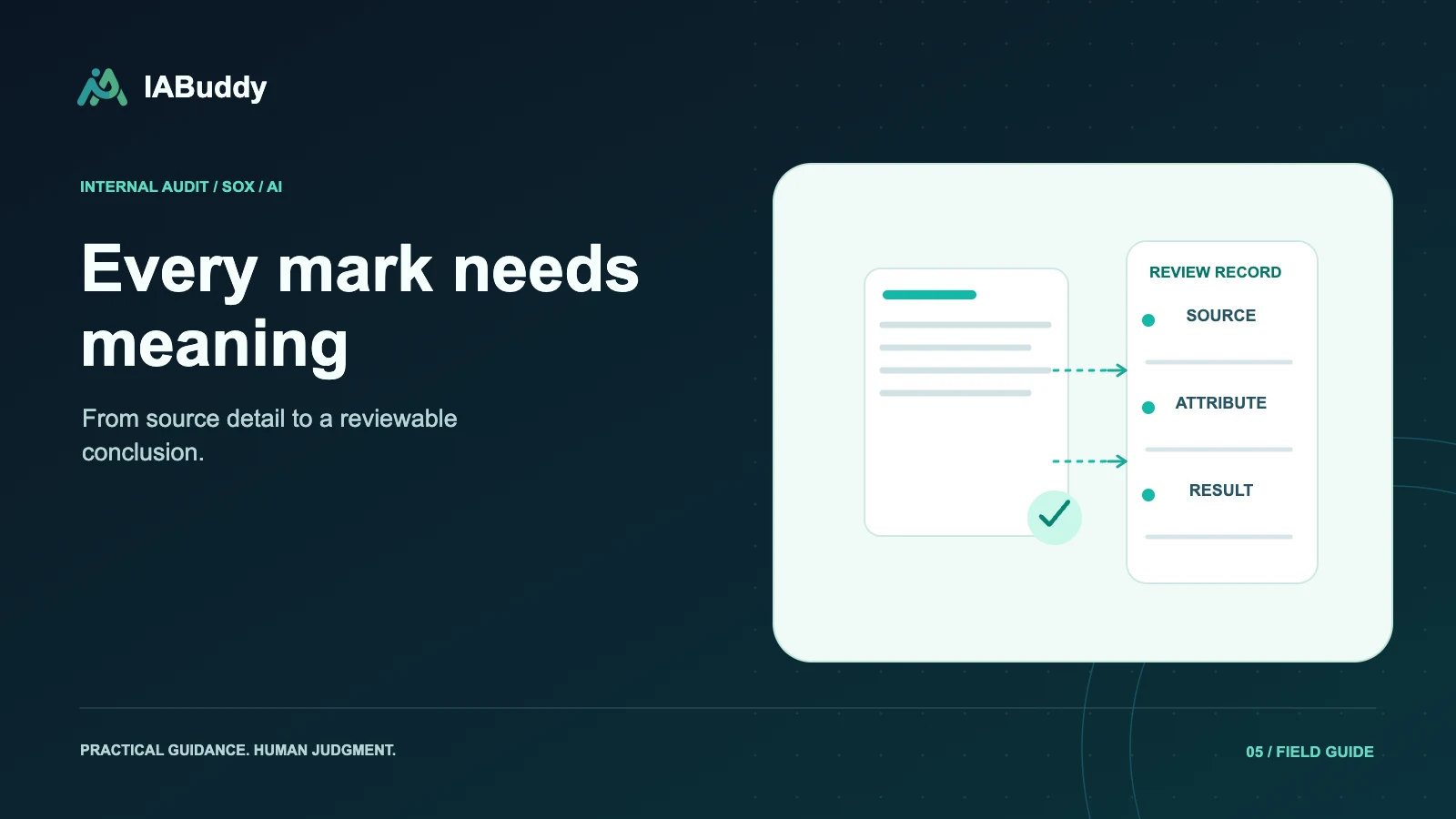
Connect each proposed result to the sample and source location. The workpaper should describe the actual procedure, observed facts, and unresolved limitations. A follow-up request should identify the missing item rather than asking the owner to repeat the entire submission.
IABuddy connects evidence-grounded testing, annotations, the testing memo, review, and follow-up. Evaluate the sequence after an exception as carefully as the first-pass output; that is where disconnected workflows often become visible.
A timing sheet for a defensible pilot
| Stage | Baseline effort | Pilot effort |
|---|---|---|
| Setup and population preparation | Record observed time | Include new setup work |
| Evidence collection and matching | Include owner clarification | Include unresolved matches |
| Testing and documentation | Include manual preparation | Include processing supervision |
| Review and correction | Include all review cycles | Include validation and edits |
| Follow-up and retest | Include additional requests | Include exception resolution |
Do not fill this table with assumed percentage savings. Record comparable work, explain exclusions, and report the number and type of tests observed.
What should remain in human hands?
Auditors retain responsibility for methodology, evidence evaluation, judgments, and conclusions. Management owns its controls and remediation. External auditors make their own decisions about procedures and reliance; a faster internal workflow does not automatically change those decisions.
Use an IABuddy demo or bounded pilot to establish what the workflow does with your evidence. Expand only when reviewed quality and total effort support the decision. Avoid extrapolating from one clean sample to every control or an entire annual SOX program.
Frequently asked questions
Can a vendor's processing time be treated as total SOX testing time?
No. Total testing effort includes setup, evidence preparation, human review, corrections, and follow-up. Ask exactly which stages and evidence types a quoted benchmark includes.
Does agentic AI require full-population testing?
No. Selection and coverage follow the test objective, population, risk, and approved methodology. Coordinating several automated steps does not itself determine how many items should be tested.