Key Takeaways
- AI-assisted evidence processing can combine native file parsing, optical character recognition, and contextual extraction to identify relevant details in PDFs, spreadsheets, screenshots, and logs.
- The result still needs validation.
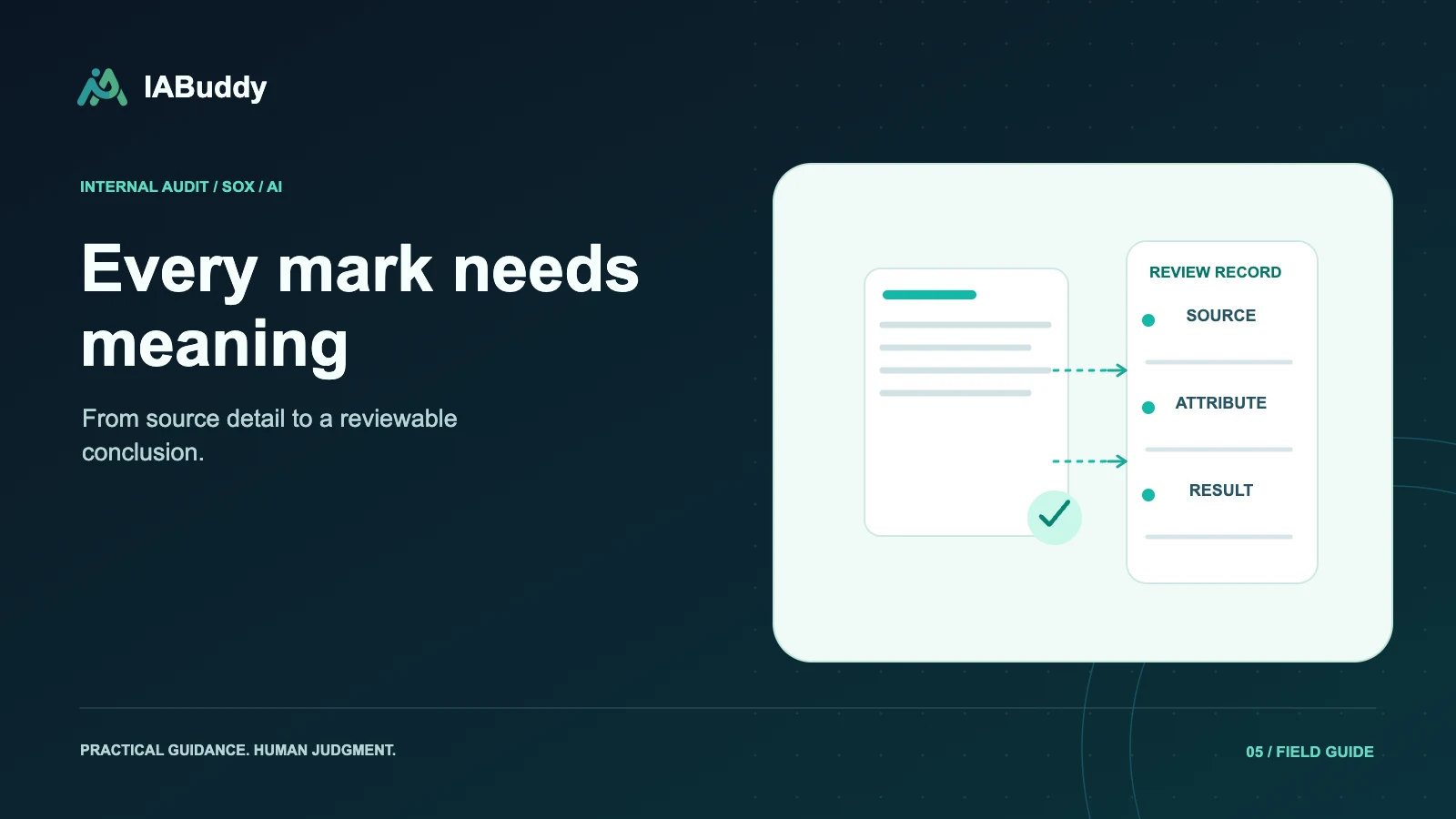
- Preserve the original file and source locations, check critical fields, and route missing or ambiguous information for review rather than inferring a successful test.
Why is unstructured evidence difficult?
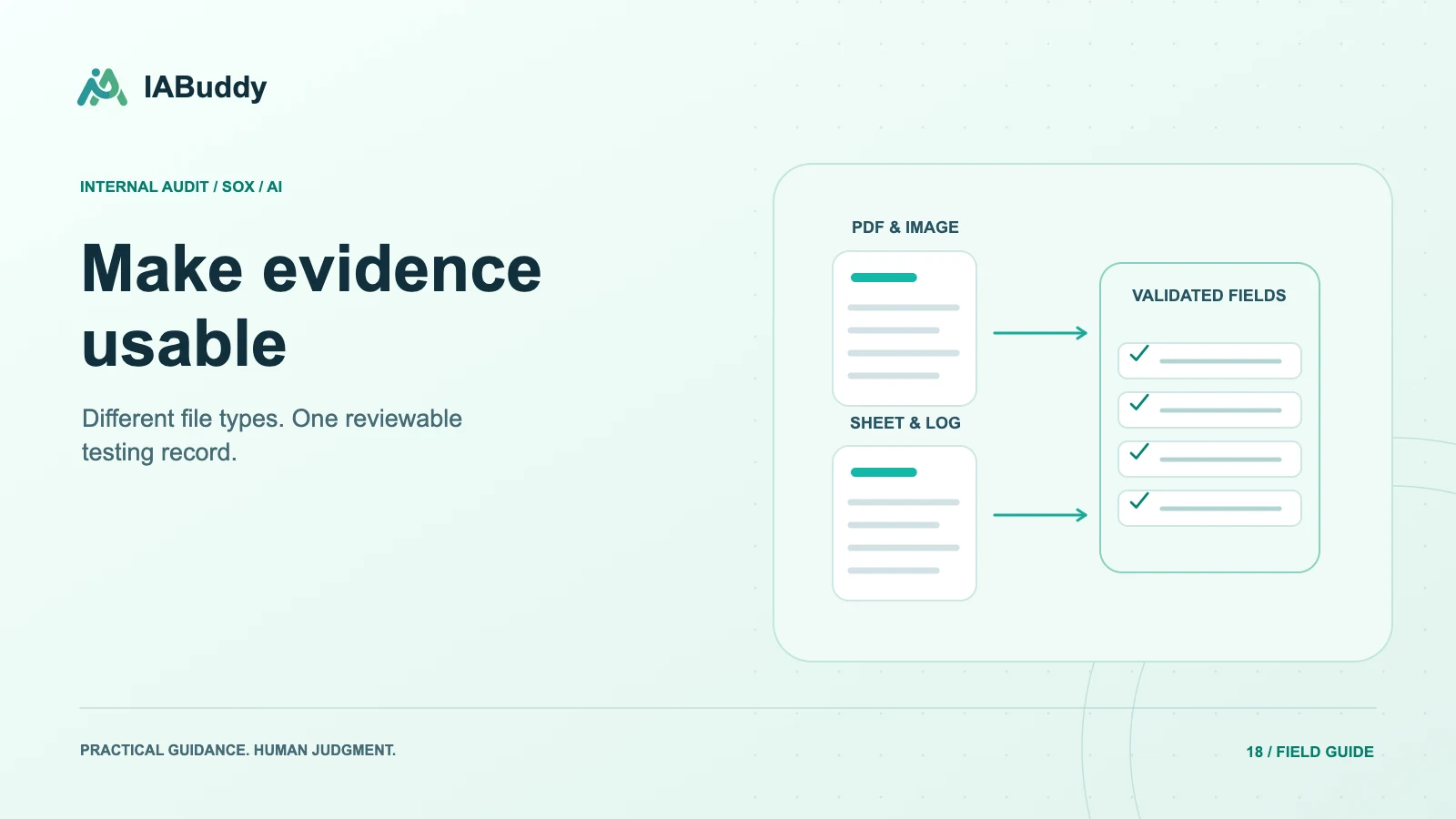
Audit support often arrives in formats designed for a business process rather than a testing procedure. A PDF may contain several transactions, a workbook may hide relevant columns, and a screenshot may omit the filter settings or reporting period. Different files can also use similar labels for different concepts.
The first task is to understand what the artifact represents. Extraction should not begin with an assumption that every uploaded file is the correct evidence for the sample or control.
Parsing, OCR, and AI are different steps
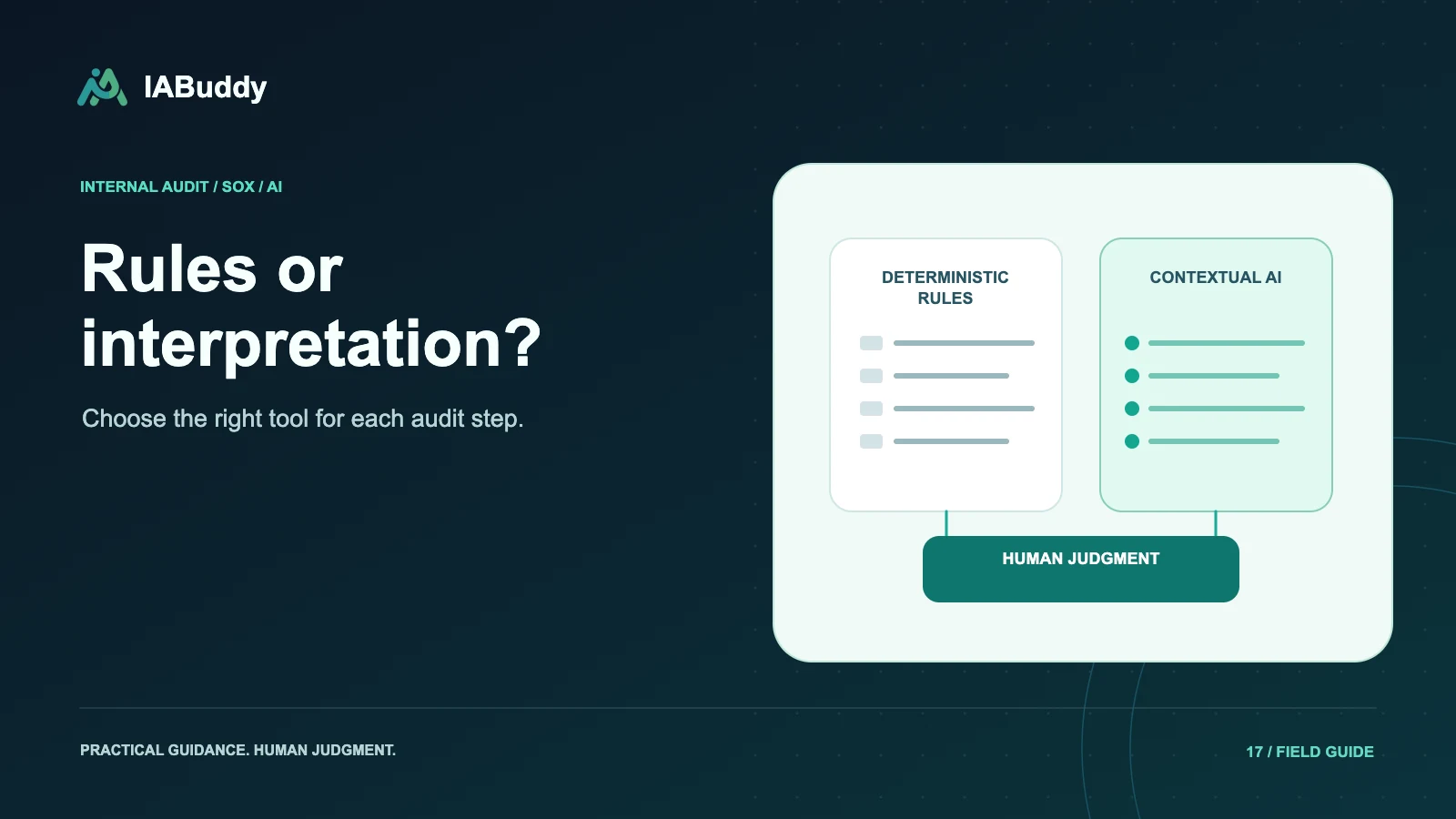
Native parsing reads information already encoded in a file, such as text or spreadsheet cells. OCR converts text visible in an image into machine-readable text. AI-assisted interpretation can help identify relevant fields or relationships from the resulting content. These techniques may be combined rather than treated as mutually exclusive alternatives.
None guarantees that the extracted information is accurate or complete. A clear digital file can still contain the wrong period, while a readable scan can still be missing a page. The workflow needs evidence-quality checks as well as extraction capability.
Match the validation to the file type
| Evidence type | Useful checks |
|---|---|
| PDF or scanned document | Page coverage, legibility, transaction identifiers, and original version |
| Spreadsheet | Sheet names, formulas, hidden rows, filters, and relevant ranges |
| Screenshot | Application context, date, visible scope, and omitted information |
| System log | Event meaning, time zone, identity fields, and coverage period |
| Policy or contract | Effective version, applicable entity, and relevant clause |
These are practical review prompts, not a complete procedure for every engagement. The control objective determines which details matter.
Preserve context through normalization
Keep the original value and the normalized value when a transformation could affect interpretation. For example, converting dates should not conceal whether the original format was day-month or month-day. Preserve currency, unit, time zone, and identifier context.
Do not merge fields merely because their labels look similar. An invoice ID may differ from a payment ID; a file-modified date may differ from an approval date. Record uncertain mappings and obtain clarification before using them as test inputs.
Distinguish extraction quality from evidence sufficiency
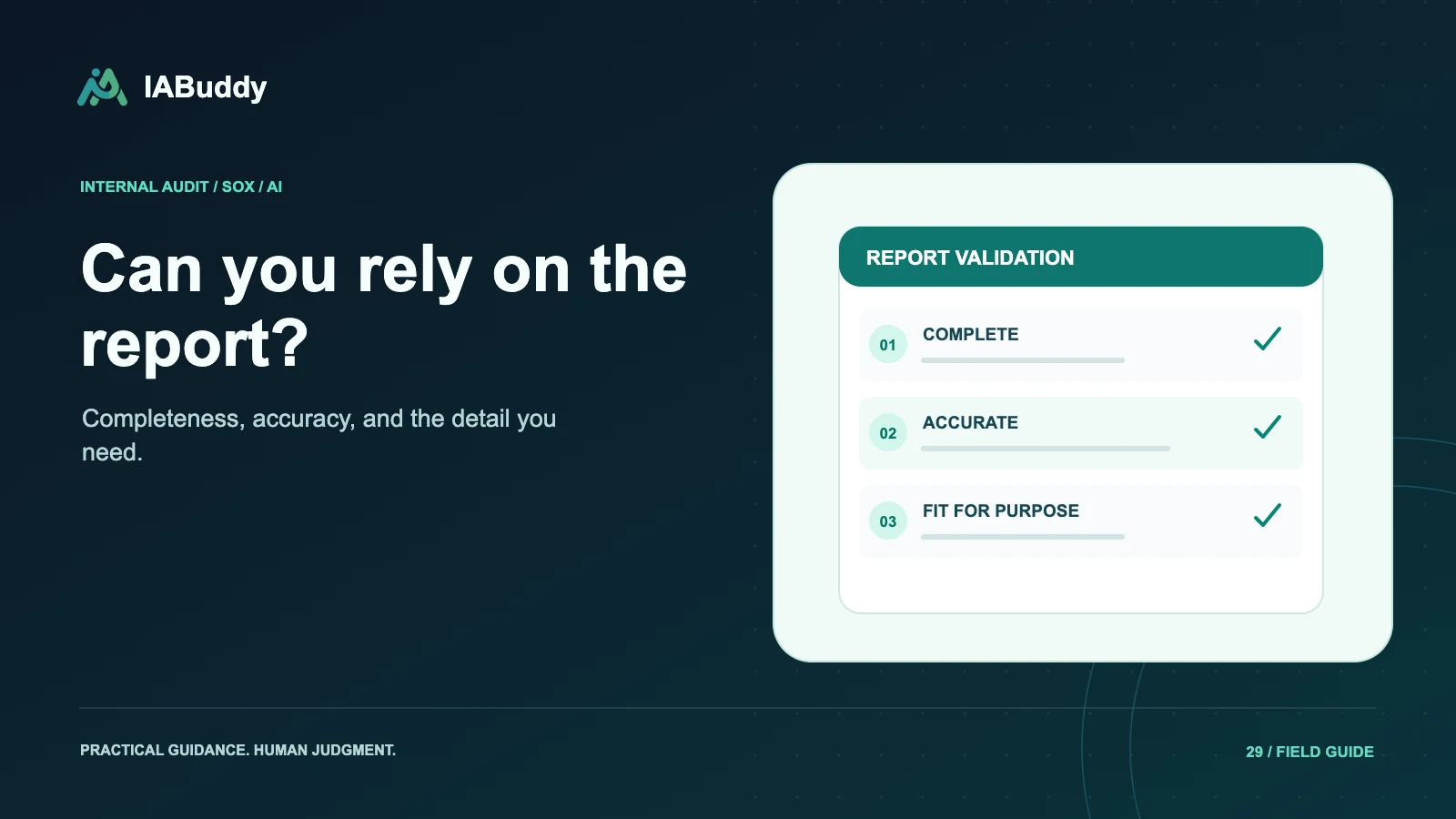
Accurately reading a screenshot does not establish that it contains the complete population. Correctly extracting a signature does not establish that the signer had authority or performed the required review.
PCAOB AS 1105 addresses the suitability of audit evidence, including information produced by the company. Use the extracted fields within an appropriate evidence evaluation, not as a replacement for it.
An illustrative ambiguity to test
Suppose a file contains 'Approved: 04/05' but does not show the year, date convention, approver identity, or related transaction. A system may locate the text perfectly and still lack enough information to conclude that approval was timely and authorized.
The appropriate workflow identifies the missing context, preserves the source reference, and requests specific support. Do not reward a tool for filling those gaps with a plausible story. Include such cases in the pilot acceptance set.
How IABuddy supports the review
IABuddy can evaluate defined testing attributes against supplied evidence and provide references to relevant files, pages, sheets, or cells. Auditors review those references and resolve gaps before approving conclusions. Confirm supported formats and file limits for the proposed workflow rather than assuming every source system is integrated.
Use the evidence management workflow with your actual mix of files. Ask the demonstration to include incomplete support and a mismatched identifier, not just clean PDFs.
Frequently asked questions
Can AI read every scan or screenshot accurately?
No. Quality depends on legibility, layout, missing context, and the processing system. Critical fields and uncertain results need validation, and some evidence may require a better source file.
Is a correctly extracted value sufficient audit evidence?
Not by itself. The auditor must also evaluate source, relevance, completeness, period, and the relationship to the procedure being performed.