Key Takeaways
- The right alternative to Optro depends on the problem you need to solve: enterprise GRC coordination, connected reporting, accounting-linked compliance, or a focused internal audit and SOX workflow.
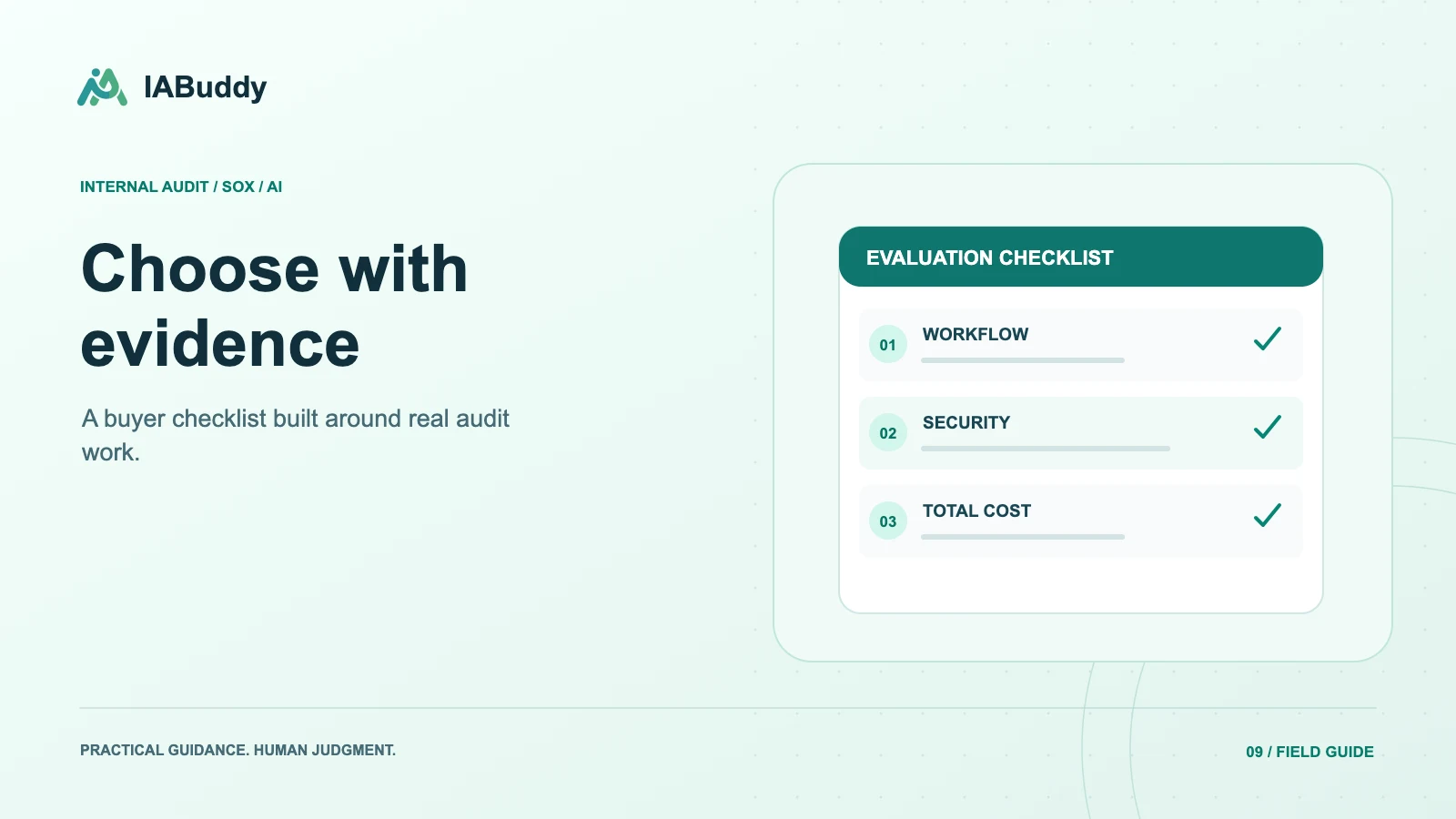
- Compare current, demonstrated capabilities and total implementation cost.
- Do not assume established platforms lack AI or that a focused tool replaces every enterprise GRC function.
Start with the requirement, not a universal winner
A team replacing an enterprise risk platform has different requirements from a lean SOX team trying to reduce evidence handling and workpaper rework. Identify which capabilities must be retained, which are underused, and which workflow is causing the current constraint.
Separate a replacement from a complementary tool. Adding focused testing support may be a different project from migrating an entire GRC program, historical issues, integrations, and reporting relationships. Define the intended operating model before comparing products.
What do the vendors publicly describe?
The following is a reading guide to vendor-published material reviewed on September 17, 2026, not an independent benchmark or a statement that every feature is included in every plan. Confirm availability, configuration, and contract scope directly.
| Platform | Public material relevant to evaluation | Question to test |
|---|---|---|
| Optro | GRC and controls capabilities; AI-native SOX automation discussed following Midship acquisition | How does the proposed offering support your end-to-end testing and review? |
| Workiva | SOX compliance and connected control workflows | How will controls, evidence, and your reporting requirements connect? |
| FloQast | Connected Compliance and AI testing | Which AI testing features are available for your deployment and plan? |
| IABuddy | Connected RCM, sampling, PBC, testing, workpapers, review, and follow-up | Can a lean team complete its actual workflow with acceptable quality and effort? |
Primary vendor references: Optro Trust Center announcement, Workiva SOX compliance, and FloQast AI testing. Vendor descriptions are claims to validate, not measured comparative results.
Why 'legacy versus AI' is not a useful decision rule
Established providers also describe AI capabilities. Labeling them all manual, retrospective, or incapable of handling evidence would obscure the real comparison. Likewise, an AI-native label does not prove that a product meets requirements for integrations, permissions, reporting, historical migration, or enterprise administration.
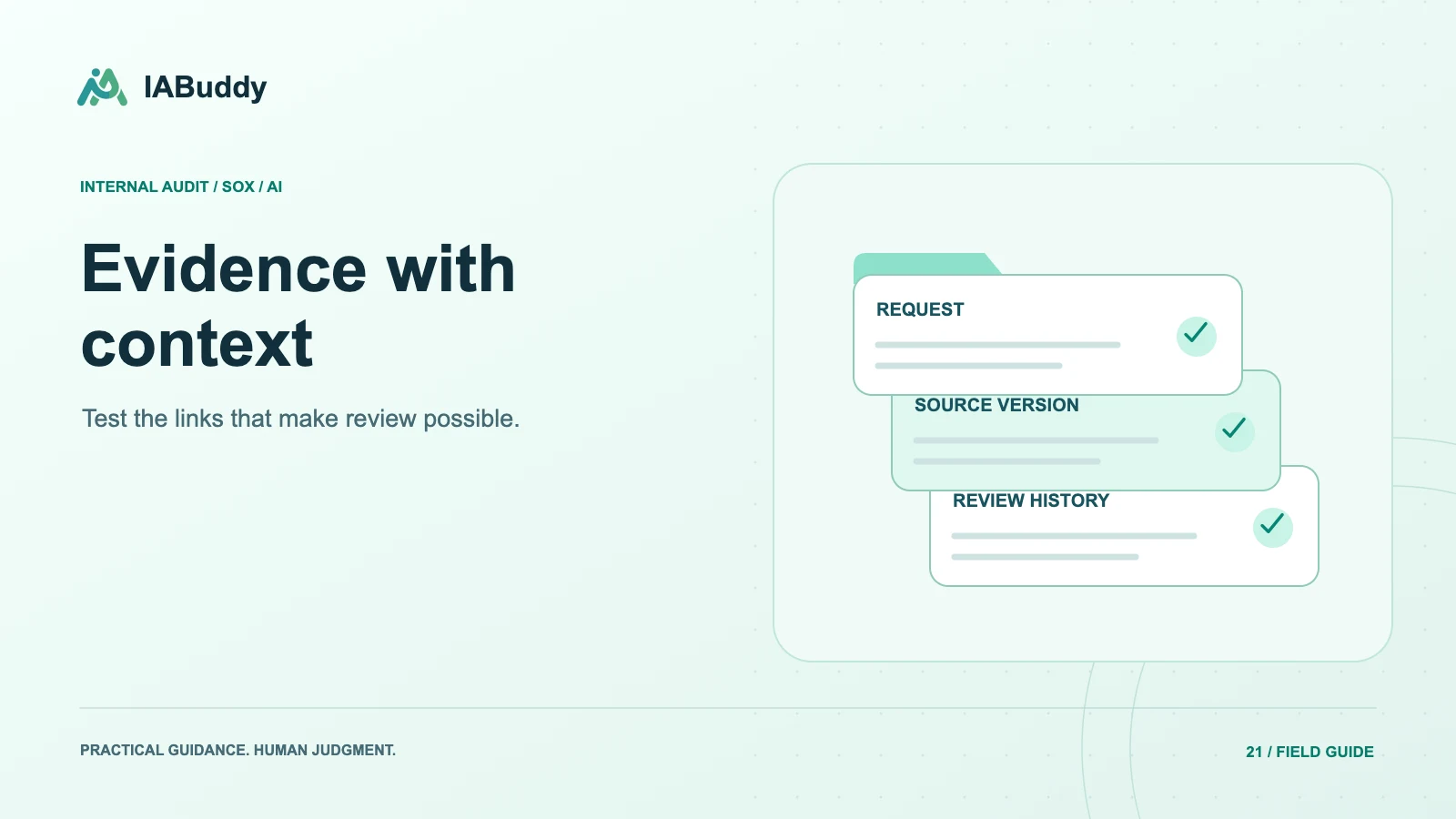
Ask each vendor to perform the same representative tasks. Include an incomplete evidence set, a changed control version, a reviewer correction, and a follow-up request. Record the work needed outside the platform.
Compare implementation with explicit assumptions
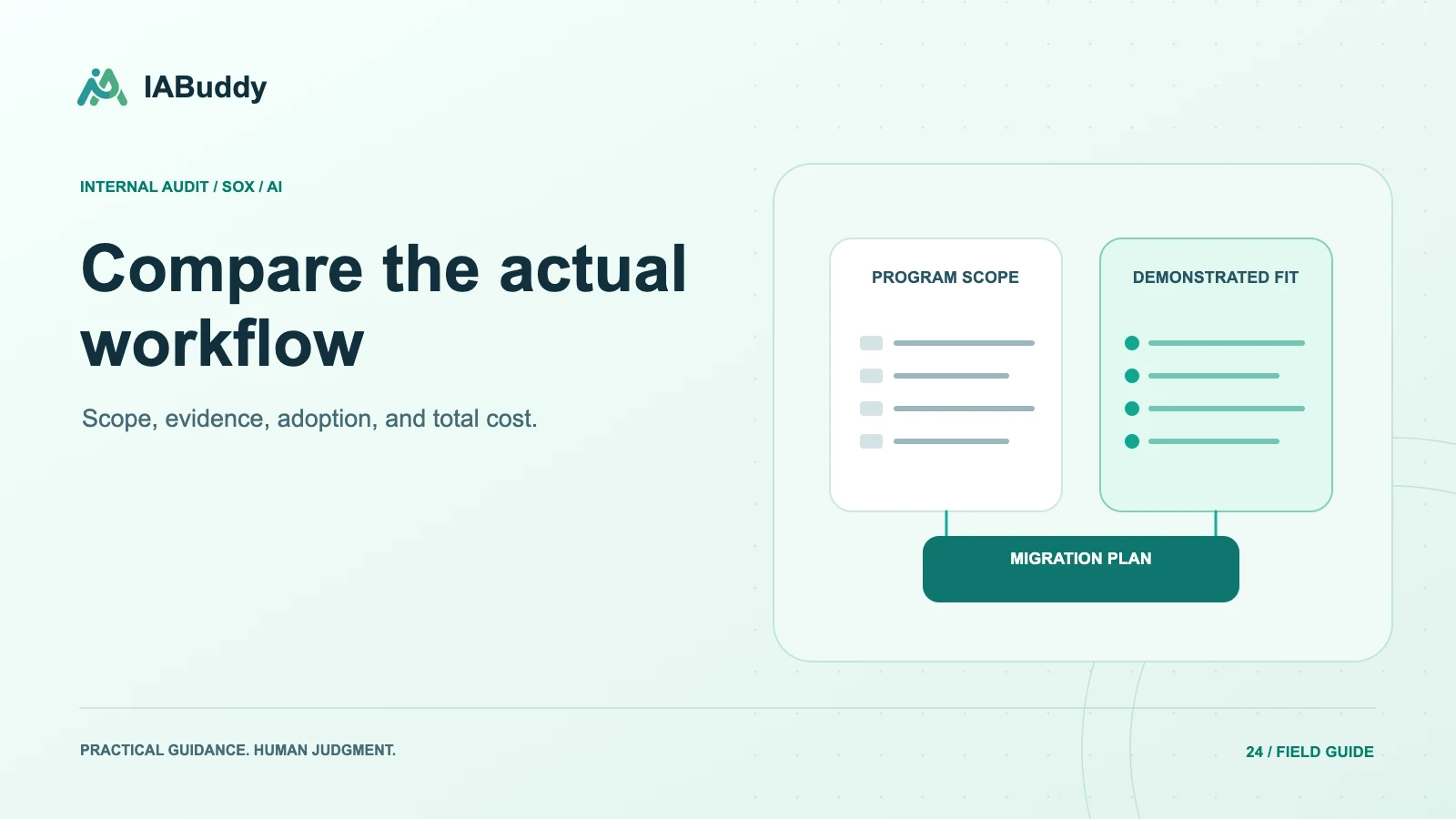
Request a plan for RCM mapping, historical records, users and roles, integrations, training, testing, and acceptance. A simple import is not the same as a full migration. Avoid universal claims that one vendor takes months while another requires no setup.
Define who owns each activity and what happens if the source data needs cleanup. Include an export and rollback approach, especially during an active audit phase. Historical evidence and conclusions should remain understandable after migration.
Compare commercial scope, not unverified price ranges
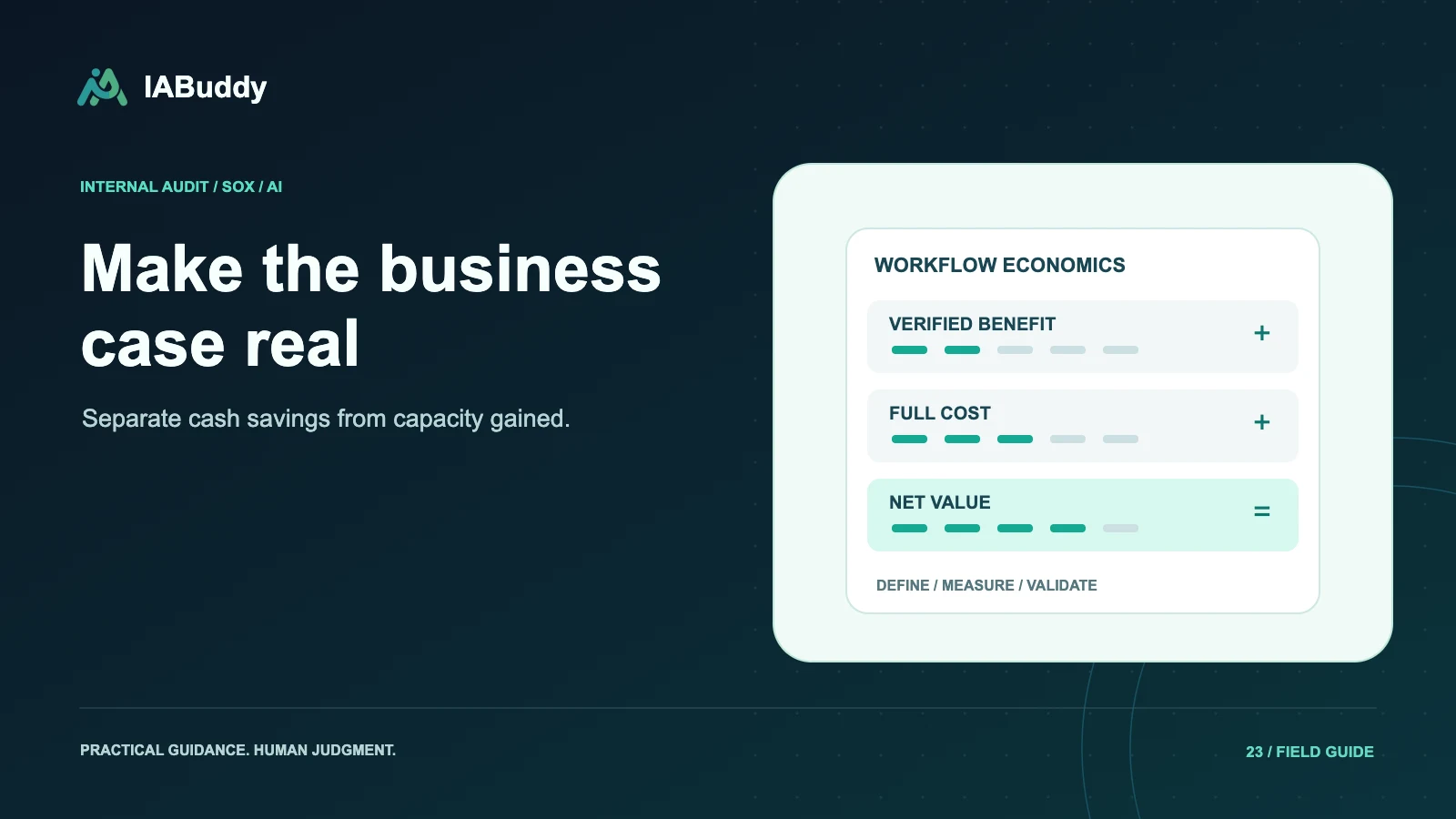
Use written proposals covering the same users, entities, workflows, usage, services, and support. Identify one-time charges and recurring commitments. Confirm renewal terms, overages, required add-ons, and the cost of leaving.
Do not reuse an outdated low-price reference as current IABuddy pricing or invent competitor quotes. The current IABuddy pricing page is the starting point for plan discussion; the final comparison should use agreed scope.
Where IABuddy may belong on the shortlist
IABuddy is designed around the work of lean internal audit and SOX teams: RCM and phase-aware sampling through evidence-grounded testing, workpapers, review, and exception follow-up. Evaluate that focus with a workflow demo.
A focused workflow may fit your needs, or your program may require broader capabilities elsewhere. Preserve a decision record of demonstrated fit, unresolved gaps, security findings, migration needs, and commercial tradeoffs. That is more useful than declaring a universal 'best' platform.
Frequently asked questions
Does Optro lack AI audit or SOX capabilities?
No such claim is made here. Optro publicly describes AI-related offerings, including SOX automation associated with its Midship acquisition. Verify the exact capabilities and availability proposed for your organization.
Can IABuddy replace every enterprise GRC platform?
That depends on requirements. Evaluate the connected audit and SOX workflow alongside any broader risk, reporting, integration, administration, and migration needs. A focused product should not be assumed to cover every enterprise use case.