01
Attribute-level results
Evaluate each defined test criterion rather than returning a generic evidence summary.
IABuddy evaluates the current test attributes against sample evidence, drafts traceable results and memo language, and keeps the source workpaper one click away.
Control test · Interim
Journal entry approval
Approval evidence is dated before posting
Workbook · Sheet 1 · G14
Approver has delegated authority
Policy PDF · page 6
Exception receives documented follow-up
Sample 03 · follow-up draft
Lean teams feel every broken handoff because the same person often has to reconstruct the context.
Each step produces structured context for the next—so automation can act on the actual audit record.
Use current control attributes and phase requirements.
Bring request files and sample rows into the test.
Draft Pass/Fail/N/A by attribute and sample.
Build notes, citations, memo sections, and conclusion.
Inspect sources, refine, sign off, or follow up.
Every capability below is present in the current product; roadmap concepts are intentionally excluded.
Evaluate each defined test criterion rather than returning a generic evidence summary.
Keep every selected sample and result in the source request order.
Capture file, page, sheet, cell, and sample context where the evidence supports it.
Use AI for a first pass or document the test manually in the same governed workflow.
Produce a structured testing memo and detailed test sheet with phase context.
Turn eligible failed attributes into a draft evidence request for human approval.
The model is instructed to ground results in uploaded evidence, follow current attributes, use controlled outcomes, and surface references. Structural validation prevents incomplete output from silently becoming final work.
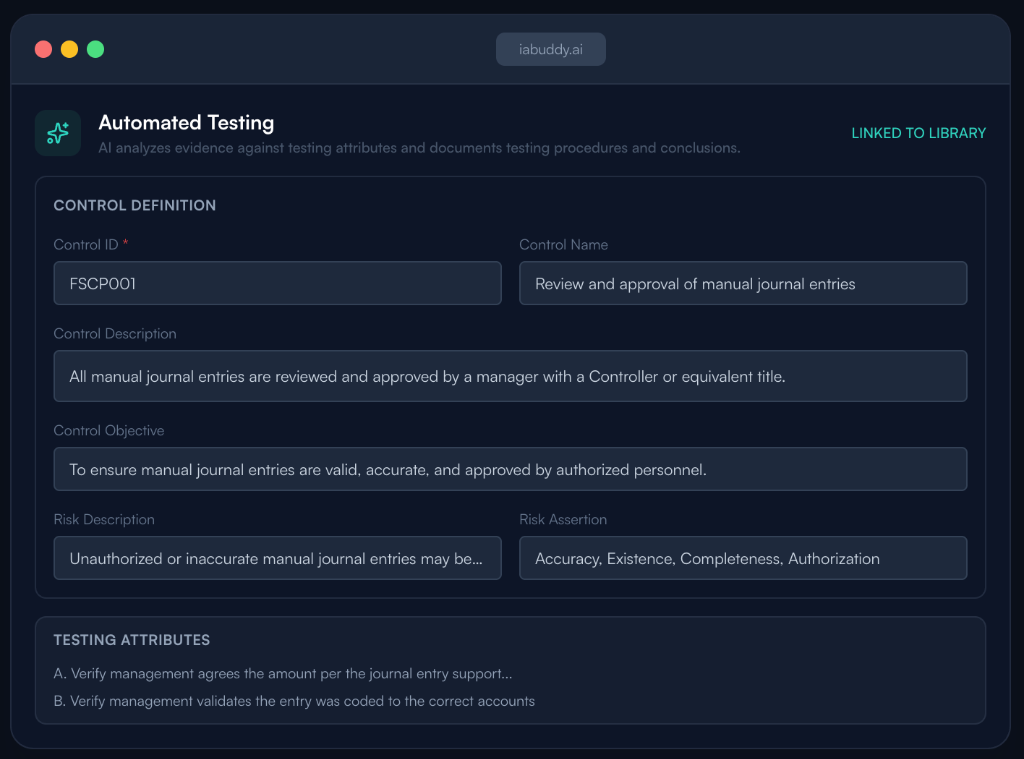
The auditor links the approved user listing and review evidence to four quarterly samples. IABuddy drafts each attribute result and cites the supporting spreadsheet cells or document pages. The reviewer opens the source, changes one result after inspection, and reruns the affected analysis with the revised criterion.
Automated control testing uses software to evaluate defined control attributes against supporting evidence and document the result. In IABuddy, AI produces a reviewable first pass with sample-level outcomes and source references; the auditor owns the final assessment.
No. IABuddy can draft test results, citations, annotations, and follow-up language, but the auditor reviews the evidence and owns the final conclusion.
Bring one control, one testing phase, or one evidence workflow. We’ll show you how it runs from plan to reviewed result.