Key Takeaways
- This is an illustrative composite scenario, not a verified customer case study.
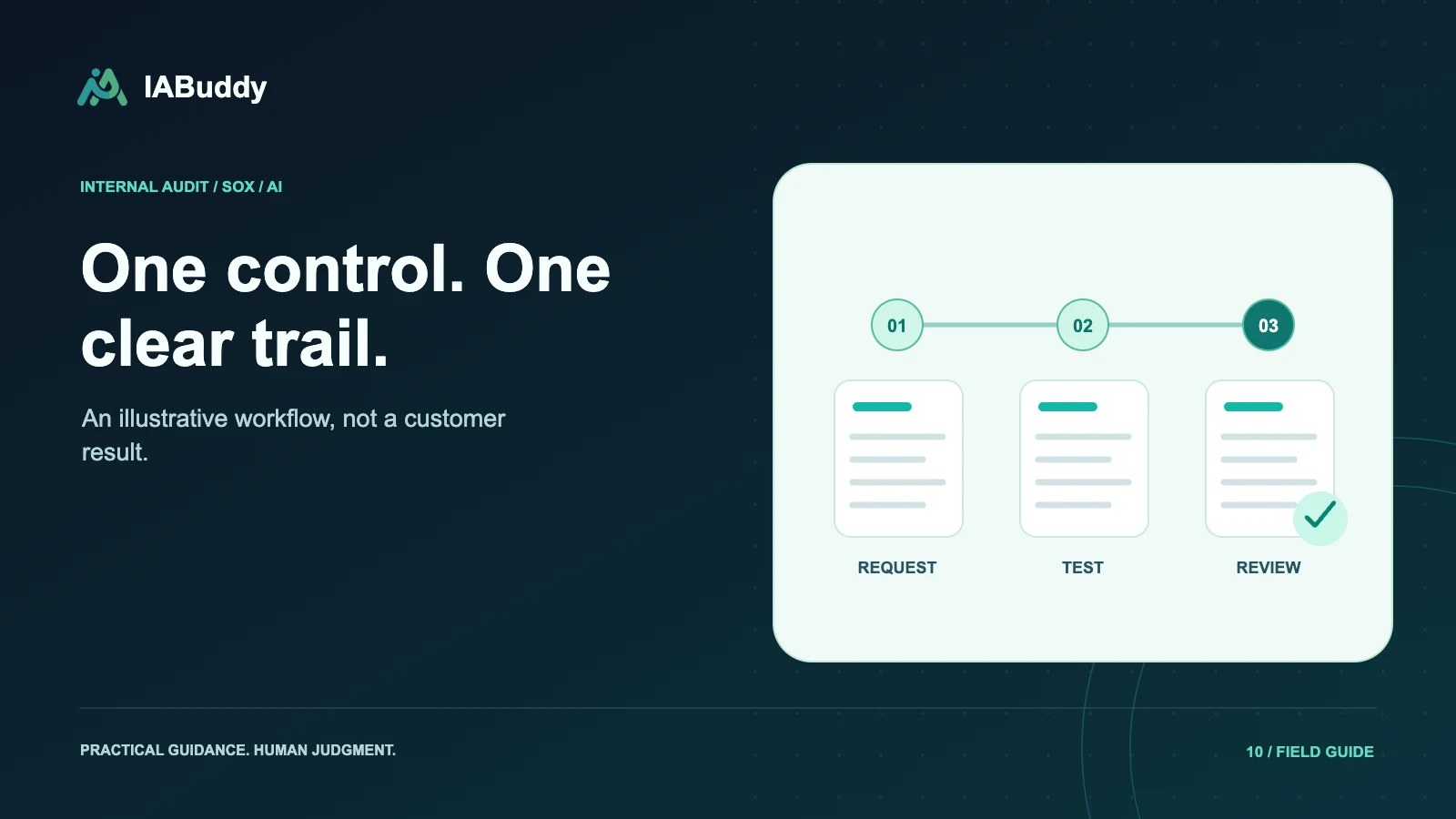
- It shows how a lean SOX team could connect an evidence request, testing attributes, source references, review, and follow-up in IABuddy.
- The company, people, and workflow assumptions are fictional; no customer savings, testimonial, or audit outcome is claimed.
The scenario and its limits
Finestar Electronics is a fictional mid-sized manufacturer with a small internal audit team. In this example, the team is testing whether selected purchase transactions received the approval required by company policy before payment release. The control, policy, population, and selection method must be defined by the team's actual methodology in a real engagement.
The purpose is to illustrate the operating sequence. It does not establish that IABuddy has been used by this company, that a customer saved a particular percentage of time, or that an external auditor accepted the work. All steps should be validated against the product configuration and the engagement's requirements.
Step 1: Define the test before requesting files
The preparer records the control objective, applicable policy version, testing period, population, selected samples, and attributes. For each sample, the test asks which approval was required, whether the approver was authorized, and whether approval occurred before the relevant release event.
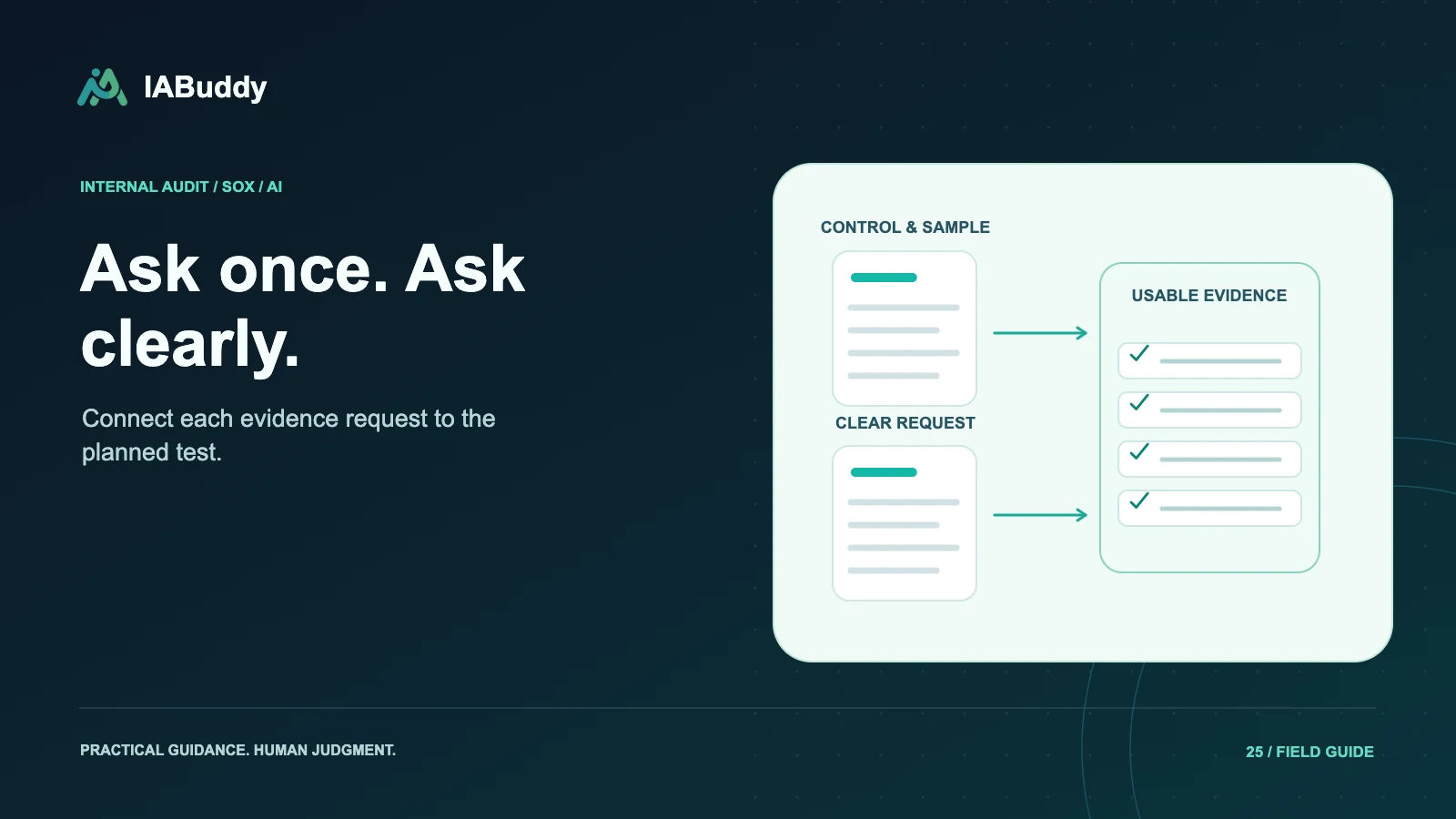
The team identifies the evidence needed to answer each question. A transaction listing alone may not establish approval authority; a separate policy or delegation record may be necessary. The request specifies those supporting records rather than asking the owner for a generic document dump.
Step 2: Collect support with its context
The control owner supplies the requested approval records and supporting policy. The preparer checks that the period and sample identifiers match the request. An item with missing approval support stays unresolved rather than being treated as complete merely because a file was uploaded.
In IABuddy, the request, sample, and evidence can remain connected to the testing workflow. The preparer should verify those links before using the support for a conclusion.
Step 3: Review the evidence-grounded first pass
AI evaluates the defined attributes against the supplied evidence and proposes results with source references. The reviewer opens the referenced material and checks identity, policy applicability, and the meaning of the timestamps. Where the source is ambiguous, the team performs additional work.
| Illustrative condition | Appropriate next step |
|---|---|
| Approval and release dates are clearly supported | Review the proposed comparison |
| Approver is absent from the supplied authority list | Investigate before concluding |
| Approval evidence is missing | Request the specific missing support |
| Two versions show different dates | Preserve both and resolve the conflict |
This table describes possible treatments, not actual test results.
Step 4: Preserve the exception and follow-up
Suppose a selected transaction lacks evidence of timely approval. The preparer documents the criterion, observed facts, and limitation, then drafts a targeted follow-up. New evidence is linked to the original test rather than replacing the record of the initial gap.
The final treatment depends on the response, additional procedures, and the team's methodology. A follow-up document is not automatically remediation, and a single exception does not by itself establish a material weakness.
Step 5: Measure whether the workflow helped
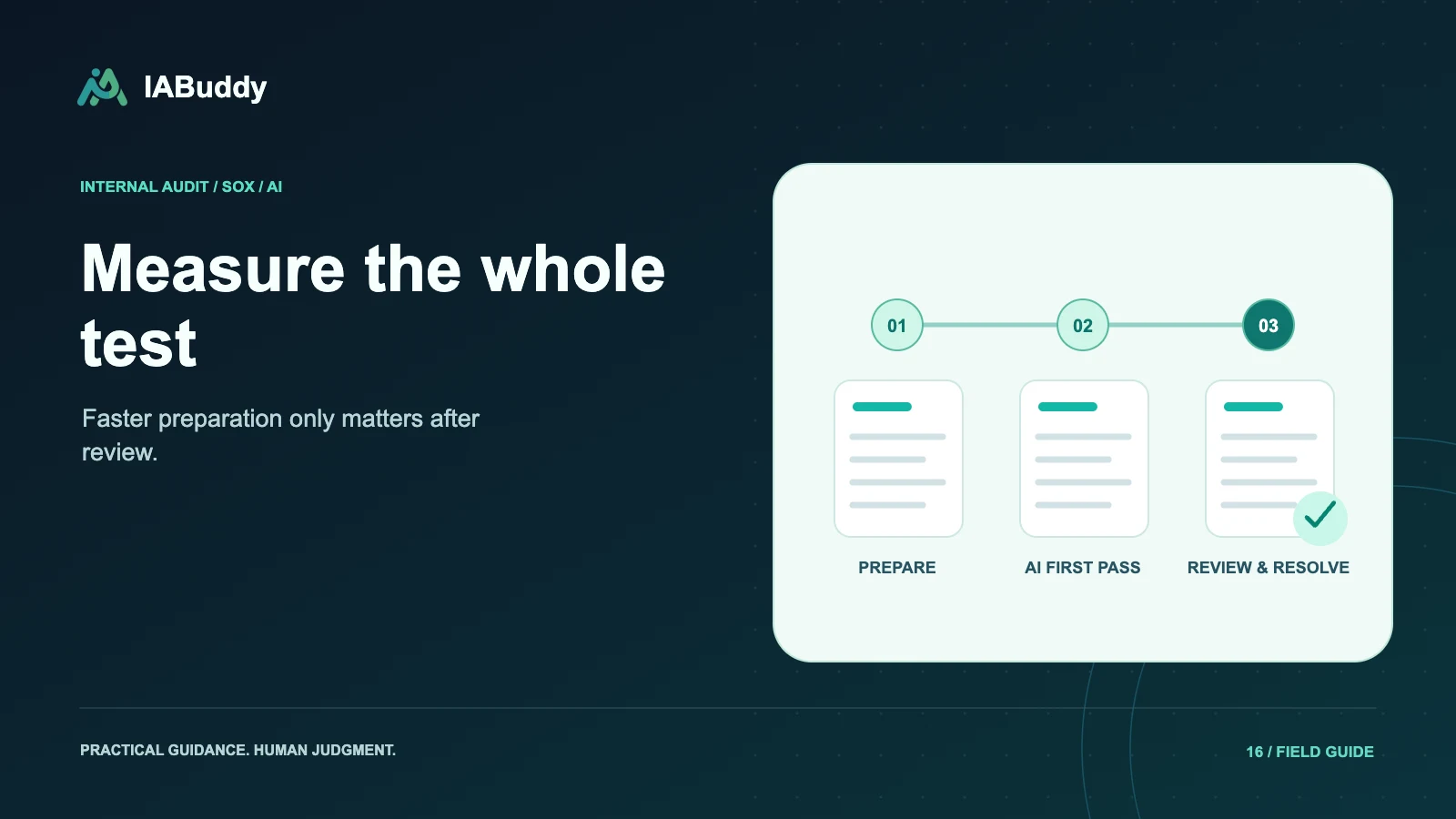
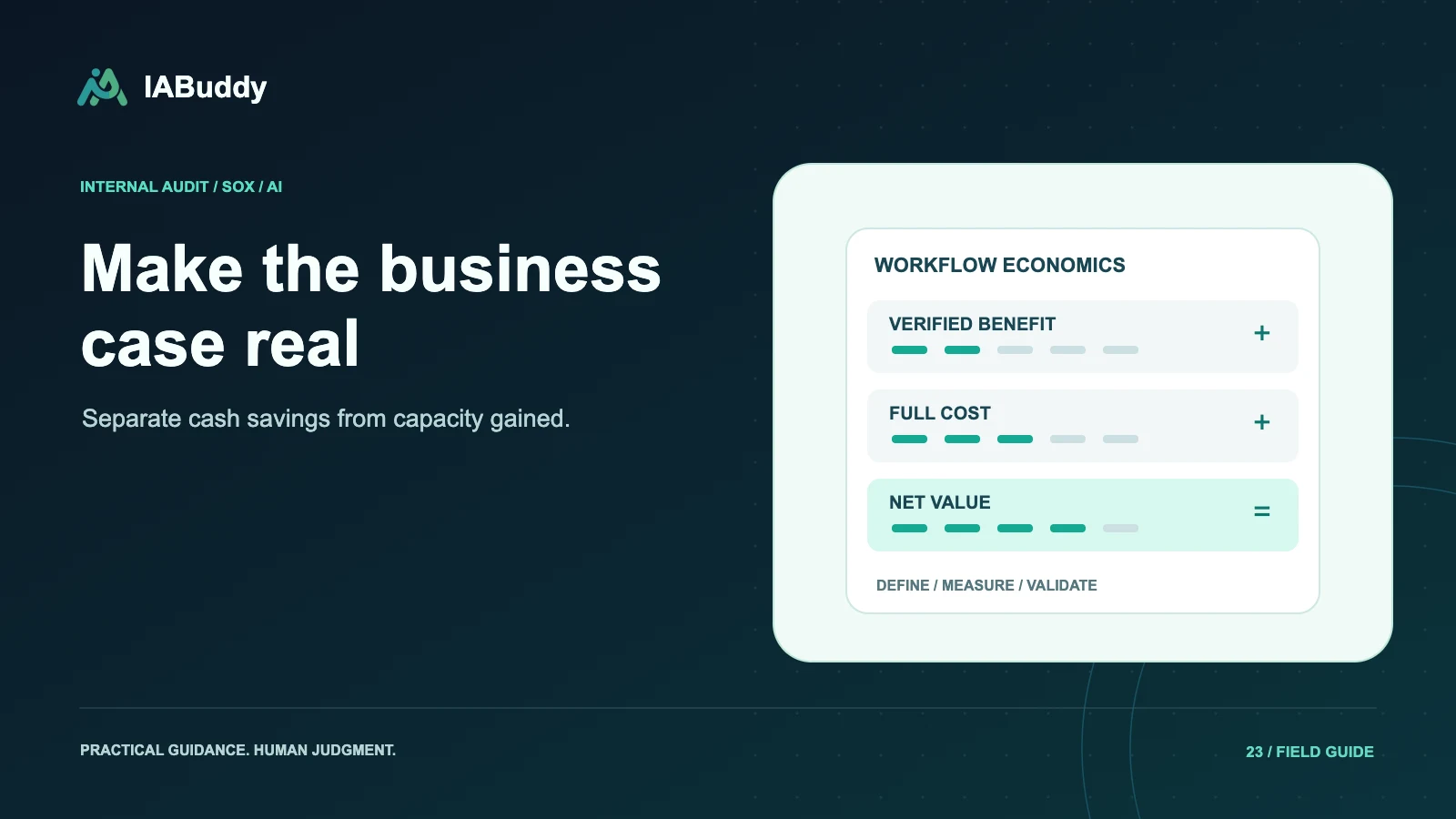
Record preparation, review, correction, and follow-up time for comparable tests. Track missing support, repeated requests, unresolved review notes, and incorrect AI proposals. Include onboarding and administration rather than counting only the processing stage.
A successful pilot needs both usable documentation and acceptable total effort. PCAOB AS 1215 provides external-audit documentation context; a software-generated package is not an assurance opinion or a guarantee of external reliance.
Apply the example to your own control
Bring an anonymized, representative control and an evidence set that includes an exception to an IABuddy workflow demo. Agree on the expected treatment before comparing outputs. Replace every assumption in this scenario with observed results before turning it into a business case or customer success claim.
Frequently asked questions
Is Finestar Electronics an IABuddy customer?
No customer relationship is asserted here. Finestar Electronics is a fictional composite used to explain a possible workflow. This article is not a verified customer case study.
What savings does this example demonstrate?
None. It provides a measurement plan rather than a claimed outcome. Actual savings must be established with comparable preparation, review, follow-up, implementation, and administration data.